
Branding & Marketing Merchandise for Small Businesses
Last Updated: 14 October 2026
Key Points
- Small businesses can use everyday products such as tote bags, notebooks, keyrings and drinkware to reinforce their corporate identity.
- We recommend choosing items that fit how customers interact with the business, such as keyrings at property handovers or notebooks during client meetings.
- Sharing the quantity, budget, purpose and deadline with us helps our team narrow the options and recommend suitable products from the start.
Corporate branding includes more than a logo, website or business card. It also covers physical items customers and staff see and use, including shopping bags, notebooks, drink bottles, keyrings and uniforms. These products carry the business identity into everyday situations and support both branding and marketing.
When choosing merchandise, we recommend starting with products that already have a purpose in the business. Retailers have a clear use for shopping bags, real estate agencies can include keyrings at property handovers, and accounting firms can use notebooks and pens during client meetings.
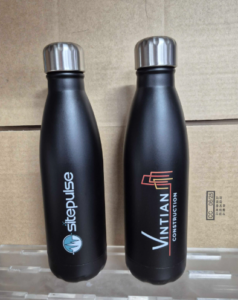
Which Products Work for Both Branding and Marketing?
Products that customers or staff already use during a purchase, meeting, handover or workday usually work best for both branding and marketing. They have an immediate purpose within the business and keep displaying the logo when used afterwards.
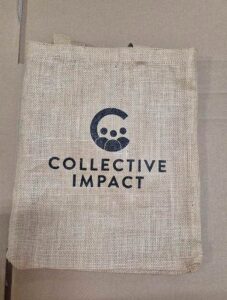
A printed calico bag works well in a retail store because customers use it immediately for their purchase and can reuse it later. Keyrings suit property and vehicle handovers, while accountants, consultants and advisers can use notebooks and pens during meetings where clients already take notes or review information.
How Does Merchandise Strengthen Corporate Identity?
Merchandise strengthens corporate identity by carrying the same logo, colours and visual style onto products that customers and staff use. A shirt, bag and notebook have different shapes and branding areas, but each one still needs to be recognisable as part of the same business. When checking the final artwork, make sure these details remain consistent:
- Approved logo version
- Brand colours
- Logo proportions
- Artwork placement
- Legibility of small wording
- Suitability of the decoration method
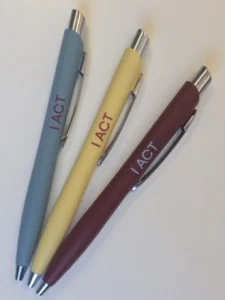
The branding method also changes how the logo appears. Embroidery needs simple shapes and readable lettering, engraving presents the logo without colour, and printing works well when the branding area gives the artwork enough room. We check these details during the artwork stage so the finished item stays close to the original identity. Keeping approved artwork files and colour references also helps with future orders. When you later add uniforms, bags or stationery, we can refer back to the existing artwork and maintain the same presentation.
How Can We Help?
We help small businesses choose the right product by first checking the quantity, budget, purpose, recipient and required date. These details quickly narrow the range and keep us from recommending products that don’t fit the order.
Charles Liu, our Co-founder, finds that detailed briefs lead to stronger recommendations. Telling us you need 200 items for a shop opening, 30 gifts for property handovers or uniforms for a team of 15 gives us a clear picture of where the product will be used and who will receive it.
Mary Aguirre-Cruz, one of our account managers, also matches products to the client’s branding, budget and purpose. She approaches a shop opening differently from an employee welcome pack or property settlement because each occasion has its own quantity, recipient and use.
How Much Should a Small Business Spend?
A practical Australian budget is around $1–$5 per person for large giveaways, $5–$15 for everyday business items, and $15–$40+ for client or staff gifts. The lower range covers items such as pens and tote bags, while a higher spend opens up options such as drinkware, compendiums and higher-value gifts.
An order of 300 event items at $2–$4 each creates a product budget of about $600–$1,200. If you need 50 client gifts at $15–$25 each, allow around $750–$1,250. Calculating the available amount per recipient gives us a useful starting point when narrowing the product range. These figures are product-budget guides in Australian dollars. GST, freight and additional decoration costs sit outside the product price where applicable, while higher quantities often reduce the unit price.
How to Start?
A small business should start with one or two products that customers or staff already use regularly. A retail store could begin with shopping bags, an accounting firm with meeting stationery, a real estate agency with keyrings, and a trade business with workwear or drink bottles. Once you identify those products, choose the one with the clearest everyday use and apply the same logo and colours already used across the business. This gives the item a practical role from the beginning and extends the corporate identity beyond the website, signage or office.