Safety Compliance Standards for Kids’ Giveaways
While choosing giveaways for a children-focused event or for schools might sound fun because you have a range of toys and activity books to choose from, it could also be risky. Children’s merchandise requires greater diligence than other items because there are certain compliance standards you need to meet. Failing to meet these standards can result in recalls, reputational harm, or more serious consequences.
This article outlines key safety compliance requirements for kids’ giveaways in Australia, including mandatory standards, labelling, and choking hazards, to help you select merchandise with confidence.
Why Safety Compliance Matters
As my colleague Ariane often reminds clients, promotional items for children are not just marketing tools. Under Australian Consumer Law, many are legally classified as toys or children’s products and are subject to the same scrutiny as retail items. The ACCC monitors this category closely, and businesses are responsible for safety, regardless of whether items are sold or distributed for free.
Ensuring safety is both a commercial necessity and an ethical obligation. Children interact with products differently and often do not heed warning labels. This reality guides every sourcing decision I make.
The Key Australian Standards to Know
I get asked a lot which standards are most important. Clients frequently ask which standards are most important. The primary framework is the AS/NZS ISO 8124 series, developed by Standards Australia and Standards New Zealand. This series includes multiple tests covering:
- Physical safety
- Flammability
- Permissible levels of substances such as lead during normal use.
- And if the product plugs in, lights up, or takes a battery, it also needs to meet AS/NZS 62115:2018, which is largely about keeping battery compartments properly secured.
Even something as ordinary as branded finger paint gets held to tighter limits than you’d expect, simply because it ends up on young skin.
Age Recommendations Aren’t a Suggestion
In my experience, age grading is often overlooked and frequently questioned by clients. A product safe for a seven-year-old may pose significant risks to a toddler, regardless of design improvements. These guidelines are based on developmental research and choking-risk thresholds for children under three, not marketing preferences.
The first question I ask clients is: what is the actual age range of the children attending? A plush toy for a maternity ward requires a different safety profile than a sports-themed item for a primary school event, even if both are intended for children.
Materials and Chemical Safety
Material selection is as important as design. Compliant children’s items must not contain harmful levels of heavy metals such as lead and cadmium, phthalates in soft plastics, or other restricted substances, particularly in products that may be chewed, sucked, or worn. Reputable suppliers should provide test reports confirming compliance with AS/NZS ISO 8124.3 or an equivalent standard. Inability to answer basic questions about product composition is a significant warning sign, regardless of price.
Choking Hazards and Small Parts
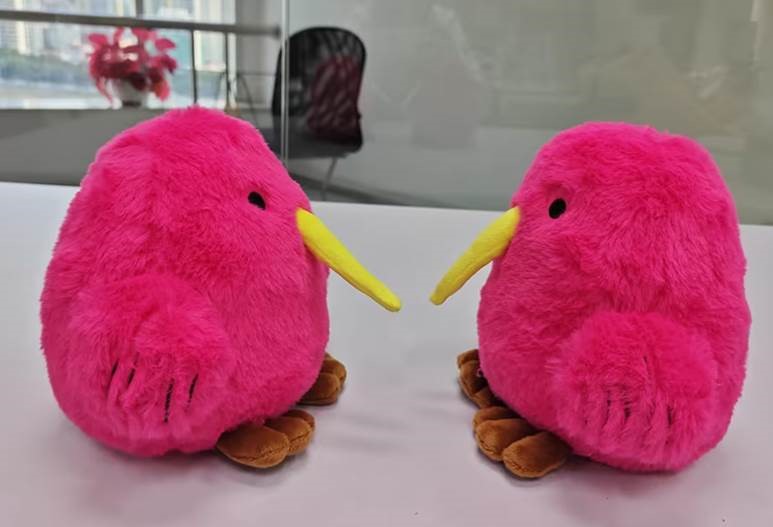
Choking is the primary safety concern for children’s products. This risk underpins the under-36-months standard, and testing laboratories use a small parts cylinder to simulate a child’s throat. If any component fits inside, the product is unsuitable for that age group.
- Eyes and clip-on accessories: these are the usual culprits, and they’re easy to miss when you’re focused on how good a design looks in a mockup.
- Button batteries deserve a special mention too, since they carry a real risk of internal chemical burns if swallowed.
Labelling Requirements
Compliant children’s products in Australia require clear labelling, including manufacturer or supplier details, age recommendations, relevant warnings (such as “not suitable for children under 3 years, small parts”), and care instructions where applicable. Effective labelling enables parents, teachers, or event volunteers to make informed safety decisions without additional information.
Supplier Responsibilities — and What to Ask Us
Our job doesn’t end at sourcing something that looks good on a mockup. We work with manufacturers. Our responsibility extends beyond sourcing visually appealing products. We collaborate with manufacturers who provide compliance documentation and address age-appropriateness and safety early in the process. When briefing a supplier on a children’s promotional item, it is appropriate to ask which standard the product was tested against, whether a test report is available, and the certified age range. A reputable supplier will readily provide this information. It has served us well:
- Match the product to the actual age group attending, not just the event theme.
- Favour simple, one-piece designs over items with multiple small parts.
- Ask suppliers for compliance documentation upfront.
- Avoid button batteries in giveaways for very young children.
- When uncertain, select the safer and more conservative option.
Frequently Asked Questions
Do these merch items need to meet the same safety standards as toys sold in stores?
Yes. Under Australian Consumer Law, safety obligations apply regardless of whether a product is sold or supplied free of charge, including as a marketing giveaway.
How can I check if a giveaway is compliant?
Ask your supplier for test reports or certificates of compliance that reference the relevant AS/NZS ISO 8124 standard, and confirm that the stated age recommendation matches your intended audience.
Are button batteries banned in kids’ giveaways?
They’re not banned outright, but products containing them must meet strict safety requirements under AS/NZS 62115:2018, including secure battery compartments. Many businesses choose to avoid battery-operated giveaways for very young children altogether.
Choosing Safe, Compliant Giveaways
Choosing promotional merchandise for children takes a little extra diligence, but it’s worth it. Understanding the standards and matching products to the right age group isn’t just a compliance box to tick. It’s about making sure the item your brand hands over is genuinely safe for the child holding it.
Ready To Buy?