Guide to Personalised Apparel for Schools and Universities Australia
Last Updated: 21 July 2026
Australia scored poorly on student belonging. Monash Lens reports that over 30% of Australian school children feel out of place at school. This issue is even more common for female, Indigenous, and disadvantaged students. Belonging matters because it affects academic results, mental health, and long-term well-being.The good news is that schools can help address this problem. Custom apparel is an easy and visible way to help students feel they belong. We supply over 15,000 uniforms and over 100,000 apparel items like t-shirts, hoodies, and polo shirts to universities and schools across Australia. We’ve seen how personalised apparel creates a sense of belonging. In this article, we share practical tips to make ordering apparel easier and to help build a stronger school culture.

Embroidery vs. Screen Printing
Schools often pick screen printing because it’s cheaper per item. However, many don’t realise that embroidered logos last over five years, while screen-printed logos usually last only two to three years, especially in areas that get a lot of wear.
The real cost comparison:
| Method | Cost per unit | Lifespan | Cost per year | Best for |
| Screen printing | $8–12 | 2–3 years | $3–6/year | Quick turnaround, performance fabrics |
| Embroidery | $12–18 | 5+ years | $2–4/year | Formal wear, durability-focused |
While embroidery lasts longer, it needs a stable, dense fabric. Loose weaves can pucker around the stitching, and very soft knits may distort. If you want moisture-wicking performance fabrics, screen printing often works better.
Bailey Turnbull from Mernda Cricket Club understood this distinction. When they ordered embroidered ties with their club logo, they were buying durability through repeated use and washing. Bailey was genuinely happy with the embroidered ties and truly appreciated the assistance in getting the details right. This is feedback from someone who received a product made to last, not something disposable.

Wendy Li, our General Manager, has seen the pattern repeat countless times. She said, “When clients understand the difference between embroidery and screen printing, they make smarter long-term decisions. I ensure every order arrives on time and in perfect condition, but the durability choice they make upfront determines whether they’re reordering in two years or five.”
Federation University in Ballarat made this exact choice. They wanted formal accessories for their staff and alumni that could withstand years of use at events. By selecting embroidered options, they invested in durability. See their full case study: How We Helped Federation University in Ballarat.
Print Cracking in High-Friction Areas
Print cracking doesn’t happen where you’d think. It’s not the logo on the chest. It’s the seams. The underarms. The inside bend of the elbows. Anywhere the fabric flexes constantly. This happens because print ink is rigid while fabric is flexible. When they move differently, the ink splits. You can prevent this, but most suppliers do not explain it. The real culprits:
- Cure temperature too low: Ink isn’t heat-set properly (should be 160–180°C), so it sits on the surface of the fabric rather than bonding to it.
- Ink layered too thick: Cheap suppliers build up the ink for colour pop, but thick layers crack faster under movement.
- Wrong fabric choice: Loose weaves can’t hold print tension the same way dense knits can
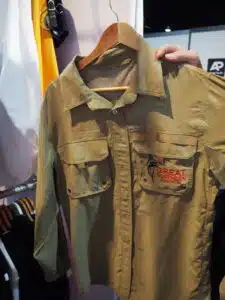
In Australian schools where students are active outdoors, including basketball courts, rugby fields, and swimming carnivals, this matters intensely. A single season of movement can crack a poorly-cured print. Key warning signs:
- Supplier quotes a price “too good to be true.”
- They don’t ask about your fabric choice during the design process.
- They don’t mention cure temperatures or ink adhesion methods.
With over 20 years of leading our company, our CEO, Charles Liu, has seen firsthand how design choices determine the longevity of apparel. He always recommends placing critical logos away from high-friction areas, and if the design needs to go in a flex zone.
Chlorine and UV Damage
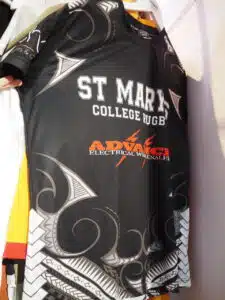
Australia’s climate is brutal on apparel in ways most schools underestimate. It’s not just heat. It’s the combination of intense UV and chlorine, especially in schools with pools. Chlorine doesn’t fade prints. It degrades them. And it yellows certain fabric blends (especially polyester-heavy mixes) in ways that look like the apparel aged a decade in a single season.
Here’s the chemistry:
Dark prints fade 2–3 times faster under Australian UV than equivalent Northern Hemisphere exposure. Lighter apparel exposed to chlorine can develop a distinctly aged, yellowed appearance within a single swimming season. This isn’t a quality failure. It’s a physics problem. When chlorine-treated sweat meets UV rays on synthetic fabric, the ink and fibre structure break down rapidly. Schools with pools, aquatic centres, or beach programs need to know this upfront. Most budget suppliers don’t mention it because the solution costs more:
Dark prints fade 2–3 times faster under Australian UV than equivalent Northern Hemisphere exposure. Lighter apparel exposed to chlorine can develop a distinctly aged, yellowed appearance within a single swimming season. This isn’t a quality failure. It’s a physics problem. When chlorine-treated sweat meets UV rays on synthetic fabric, the ink and fibre structure break down rapidly. Schools with pools, aquatic centres, or beach programs need to know this upfront. Most budget suppliers don’t mention it because the solution costs more:
| Factor | Budget Approach | Credible Approach |
| Fabric blend | Poly-cotton (cheaper) | Higher natural fiber content |
| Ink type | Standard pigment | UV-protective ink |
| Pre-treatment | None | Chlorine-resistant finish |
| Expected lifespan | 1–2 years (pool exposure) | 3–4 years (pool exposure) |
The cost difference? Usually 12–18% more per garment. Over a five-year cycle, it’s the most economical choice schools can make.
Take Beaumont Road Public School in Killara, Sydney. They ordered custom swimming caps for their swimming athletes and understood that budget apparel wouldn’t survive regular pool exposure. They invested in quality designed for chlorine and the Australian sun. You can read their full case study here: Beaumont Road Public School Case Study.
True Cost of Cheap Apparel
This is where schools make their biggest strategic mistake. A $15 polo that lasts one year doesn’t cost $15. It costs $15 every year. A $22 polo that lasts three years? That’s $7.33 per year. Budget apparel fails in predictable ways:
- Fabric degrades (pilling, stretching out of shape within months)
- Print fails (cracking, bleeding, peeling after 5–10 washes)
- Shape doesn’t hold (collars curl, cuffs fray, hems shrink unevenly)
Schools see the upfront cost and order in bulk. Twelve months later, they discover the apparel looks worn and damaged. Then they face a choice: replace mid-cycle (expensive, disrupts uniformity) or live with uniforms that look degraded for the rest of the year.
The hidden cost of cheap apparel:
- Replacement orders needed mid-cycle
- Rush order premiums (expensive when you need replacements fast)
- Institutional reputation impact (faded, pilled uniforms = perception of poor resources)
- Staff morale (wearing shabby apparel affects how they feel representing the school)
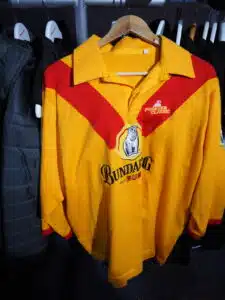
Better-quality apparel holds its shape longer, maintains its appearance through multiple washes, and enhances your institution’s appearance. Students wearing crisp, well-maintained apparel look sharp. That reflects back on school pride, professionalism, and institutional standards.
Mary Aguirre, one of our credible account managers, says, “My favourite clients are those who understand that a good product upfront saves them money and headaches for years. I’d rather help them invest in something that lasts than watch them replace inferior apparel every season.” As Australia’s #1 bulk supplier of promotional apparel, we’ve seen this cycle repeat across hundreds of institutions. The ones who win in the long term are those who invest strategically upfront, not those who chase the lowest per-unit price.
Getting Started: What to Ask Your Supplier
Don’t settle for vague answers. A proven supplier will explain their process and stand behind it. These are the questions that matter:
- What’s your cure temperature for print adhesion, and how do you verify it?
- Can you recommend a fabric choice for the Australian climate exposure and our specific use case?
- How do you handle logo placement across different sizes and body types?
- What’s the realistic lifespan of embroidery vs. screen printing for our intended use?
- Do you offer UV-protective or chlorine-resistant treatments, and what’s the cost difference?
Your apparel order should reflect your institution’s standards. That requires working with a proven supplier experienced enough to explain pitfalls before they become costly mistakes, not after you’ve already ordered.
Ready to order apparel that lasts? Book a free consultation to discuss your school’s specific needs. Or call us on 1300 858 288 to speak with our team today.