
We Sent 400 T-Shirts in the Mail and Turned Them Into $10,000 in Sales
Most marketers would call a mail-out that costs $7,000 to produce and post a gamble. We call it one of the best-performing campaigns we’ve run all year — and the maths behind it is simpler than you’d think. I recently unpacked this campaign on The Promo Playbook, a podcast where I chat with fellow marketer Nathan about what’s actually working in lead generation right now, and the response was strong enough that it’s worth setting out in full here.
In this article, I’ll walk you through exactly how a plain, cheeky t-shirt turned into real purchase orders, why the campaign worked even for a brand nobody wants to wear as a badge of honour, and how pairing that physical touchpoint with AI-driven email outreach is reshaping the way we generate leads.

Does direct mail with merchandise still work?
We recently had 400 T-shirts printed with a logo at a cost price of roughly $3,000 to $4,000. Each shirt was posted through Australia Post in an $8 mail bag. This campaign allowed us to generate $10,000 in confirmed sales, one week after the shirts arrived at our clients. In fact, we even got a reply from our client who thanked us for the t-shirt, admitted they’d completely forgotten to purchase merch that year, and placed a purchase order on the spot. The mistake we see other businesses make with a campaign like this:
- Treating it as a single-transaction test — if the first mail-out doesn’t turn an immediate profit, they scrap it.
- Ignoring residual exposure. Even a break-even mail-out still banks ongoing brand impressions every time that shirt gets worn again, six months or a year from now.
- Measuring success only in the first week, rather than tracking repeat orders over the following months
Why we didn’t make an aspirational t-shirt
We didn’t design this t-shirt to be something customers would proudly wear out on the street. Cubic Promote isn’t Ralph Lauren, Alo, or Lululemon — nobody is choosing our logo as a fashion statement, and pretending otherwise would have been a waste of the print run. So instead, we built the design around everyday utility:
- Printed the line “the t-shirt you wear for getting things done” as the hero message
- Kept the logo small and unfussy, placed at the bottom rather than across the chest
- Designed it to be the shirt someone grabs to paint the house in, walk the dog in, wash the car in, or wear to the gym
- Let the utility do the work — every time the shirt gets used for something practical, our branding travels with it into the backyard, the local park, or the driveway, without the wearer feeling like a walking advertisement.
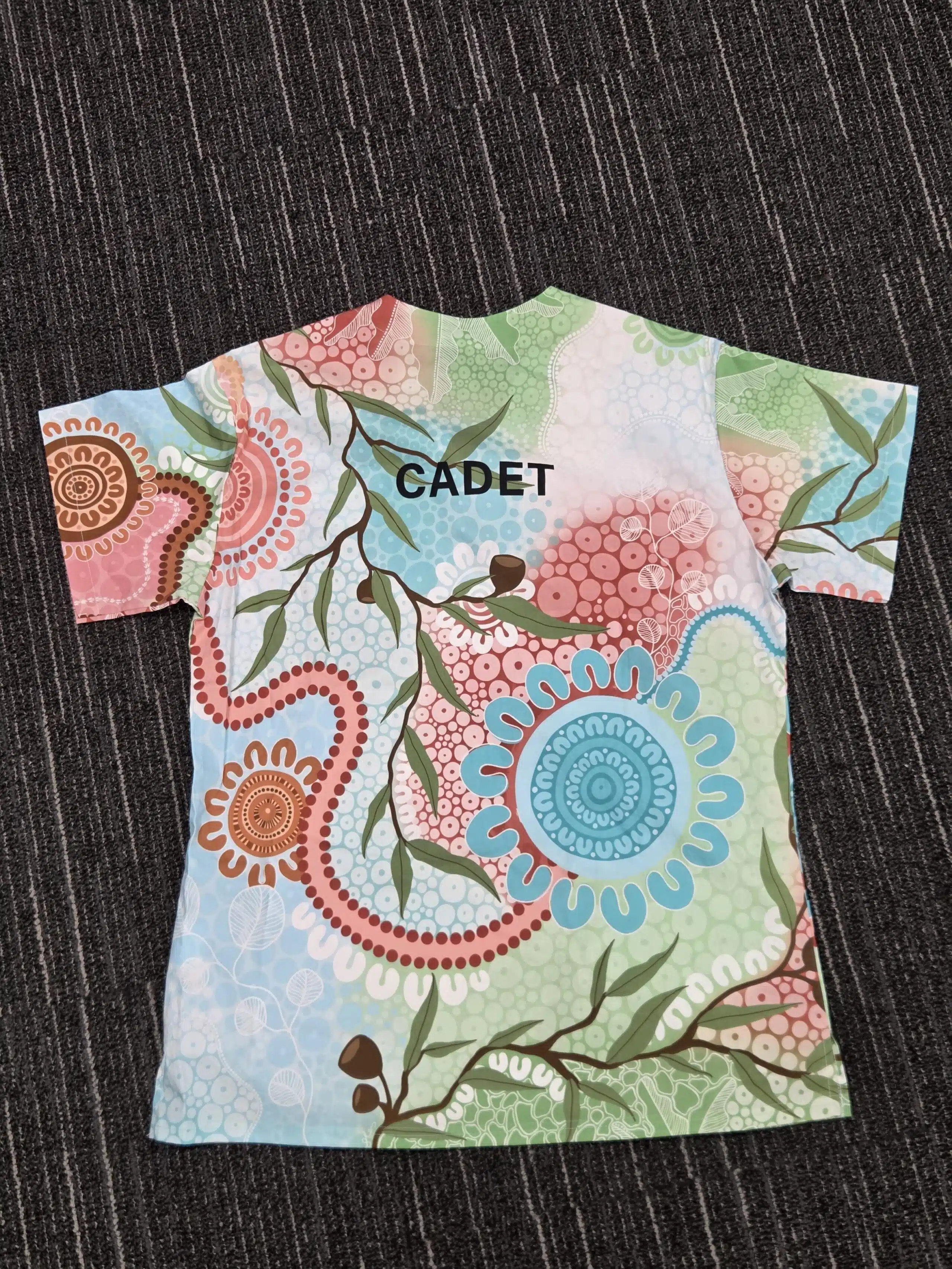

What we spent vs. what came back
Buyers considering a similar campaign always ask the same question first — is this worth it, and what does “worth it” look like in real numbers? Here’s the breakdown from our own run:
That week-one return already covers the cost of the campaign and then some. Every wear after that is pure upside that most cost-benefit spreadsheets don’t even try to capture.
Why one send isn’t the real test
We’ve sent mail-outs to our clients for over 20 years, and we know that one single mail-out doesn’t automatically convert. Take this example:
- A 14-year-old put up handwritten shoe-cleaning ads on community noticeboards around Sydney over the December school holidays.
- The ads went up on supermarket boards, library boards, and car park boards, offering to clean sneakers for $15 to $20 a pair.
- Noticeboards typically refresh every three to four weeks, so by January every ad had been pulled down or replaced.
- Seven months later, in the July school holidays, three separate people emailed asking to get their shoes cleaned — despite no ads running since early January.
- Those customers had photographed the ad, or remembered it, and came back months after the fact.
That’s the same mechanic behind a t-shirt mail-out, a merch drop, or any physical promotional touchpoint.
Pairing direct mail with AI-powered email outreach
Direct mail and branded merch handle the physical, ongoing exposure side of lead generation. But we’ve also leaned hard into email marketing this year, because it’s one of the only channels where you genuinely control both the message and who receives it. Why email still outperforms other channels for control and measurement:
- A billboard can’t tell you who looked at it.
- Digital ads can’t confirm someone acted on an emotional response.
- Email can — you can see who opened it, what they clicked, and who converted.

This month we kicked off a campaign using a platform that scrapes public social media activity and news coverage for buying signals. For our business, the trigger events we watch for include:
- A company announcing or sponsoring an upcoming conference or expo
- A business going through a rebrand
- A merger or acquisition, on either side of the deal
- A sudden spike in job advertisements, which signals headcount growth
When one of these triggers appears, here’s what happens next:
- The platform surfaces the relevant contact — sometimes a LinkedIn profile, a direct email, or occasionally a phone number.
- We send a message tailored to that specific event — for example, noticing a company is exhibiting at an upcoming expo and asking whether they’d like merchandise to engage attendees at their booth.
- The email lands at the exact moment a business actually needs what we sell, rather than as a generic newsletter blast.
Direct mail, email, and digital ads compared
Reviving a dormant list with a lead magnet
Nathan, my co-host on The Promo Playbook, shared a lead-generation play from one of his clients that pairs well with this. The client, an accounting firm, had built up a list of around 300 leads through LinkedIn advertising and other direct-response campaigns. His view, and it holds for most mainstream businesses, is that if you send a list that size a reasonably good offer, you will get an inquiry out of it. It’s a numbers game, plain and simple. The catch was that the list had gone quiet. Nathan got caught up bringing new staff on board and let it sit dormant for a stretch. To reignite it, he:
- Created a lead magnet — a free 10-page report covering common tax and accounting issues and how to solve them
- Sent it out as a gift to the entire database, rather than pitching straight away
- Tracked exactly who opened it, then followed up with the people who engaged.
- Picked up a couple of inquiries almost immediately off the back of it
Marketing That Stays in Front of Customers
The real lesson from this campaign is simple: marketing works better when you stay in front of customers. A t-shirt can keep your brand visible for months or even years, while timely email outreach reaches people when they’re actually ready to buy. Instead of relying on one-off campaigns, combine channels that build awareness over time with those that drive immediate action. If you want to know how you can use branded apparel like t-shirts to boost your marketing, read our Branded Apparel Case Studies.
Ready To Buy?