Profit per item determines how much money your school actually keeps, which is why a fundraiser can sell out and still fall short of the target
Parents buy more when they know exactly what project their money is going towards
Families buy products they can see a daily use for, not products their school chose because they were the cheapest option on the quote
Many school fundraisers sell strongly and still fall short of the goal because the numbers behind the campaign never added up in the first place. When the target, timing, margin and merchandise are pulling in different directions, participation drops and profit disappears even when the order sheet looks healthy. In this article, we cover where school fundraisers usually lose participation and profit, the numbers your P&C needs to confirm before ordering, and how to choose merchandise your school community will genuinely support.
Where Your School Fundraiser Actually Loses Money
Before rebuilding the whole campaign, look at where your last one lost people or profit. In most schools, the issue sits inside one of six areas: the goal, the timing, the buying process, the product choice, the profit per sale, or the assumption about how many families will actually participate.
According to the NSW Department of Education, school fundraising is regulated activity that requires proper approval and recordkeeping through the school or P&C. On top of that, P&C Federation NSW encourages committees to set a specific target, agree on a budget and cross-check activities against the wider school calendar so that families are not being asked for money during weeks when camp fees, uniforms or excursions are already due. The table below shows how these issues usually appear inside a school setting:
Problem
Why It Hurts Your Fundraiser
What To Do Instead
Vague goal
Families do not know what they are funding
Name the exact project and dollar amount
Too many campaigns
Parents become selective and skip smaller asks
Space campaigns across the school calendar
Complicated ordering
Buyers drop off before completing the purchase
Keep the process to one order and one payment
Poor timing
The campaign competes with camp or uniform costs
Cross-check the school calendar first
Weak margins
Big sales still produce disappointing profit
Calculate profit per item before ordering
Wrong merchandise
Families see little reason to buy
Match the product to the audience and event
For example, a goal such as “Help us raise $8,000 for new library shading” gives families a specific reason to open their wallet. Compare that to a general “school fundraiser” message and the difference in participation becomes obvious. As P&C Federation NSW notes, associations benefit from being able to set specific targets such as improving the school environment or enhancing technology, because it lets parents make positive changes on a quicker timetable.
Similarly, timing shapes your results as much as the goal itself. If your campaign launches the same fortnight as camp payments, uniform orders or another P&C event, you are competing for money families have already allocated. For that reason, cross-checking dates with the school’s finance office or the newsletter calendar before locking anything in tends to protect your participation numbers. Alongside timing, schools also need to keep the buying process straightforward. Every extra step your parents have to take, whether that is printing a form, chasing cash, replying to reminder emails or working within a narrow collection window, quietly loses you buyers.
What To Confirm Before Ordering
One of the most common mistakes in school fundraising is planning around how much merchandise your school can sell, rather than how much profit will actually land in the P&C account once every cost is settled. To avoid that, work backwards from the target before deciding on quantity or price. Confirm the following:
Total amount your school needs to raise: settle on the exact figure
Landed cost per item: include product, printing and delivery
Realistic sale price to families: base this on what your community has paid in previous years
Profit per item: after every cost is deducted, not before
Number of units required to hit the target: match against actual past participation
Realistic participation rate: use last year’s figures, not the best-case scenario
Plan for unsold stock: decide in advance who stores or sells any leftovers
For instance, if your target requires 500 sales and your last three campaigns each attracted around 150 families, the plan needs adjusting before launch, not after. This is also where ordering in large volumes, meaning higher quantities that bring the per-unit price down, starts working in your favour, but only when you are confident about sell-through.
Charles Liu, our Co-founder and Marketing Director, deals with this trade-off constantly. He often tells clients that giving him a clear budget upfront gives him room to recommend a product tier and volume that meets the target at a lower per-unit cost, instead of defaulting to the cheapest item on the largest possible order. When schools skip that conversation and chase the lowest unit price without checking realistic sales, they usually end up storing leftover stock in a corridor cupboard while the campaign still falls short.
Choosing Merchandise Your School Community Will Actually Buy
School merchandise sells when the product has a genuine use beyond the fundraiser itself. The cause opens the sale, and the usefulness of the item closes it. Below is a shortlist of products that order most by Australian schools, from our top list:
Product
Why It Works In A School Setting
Custom drink bottles
Used daily at school, sport training and home
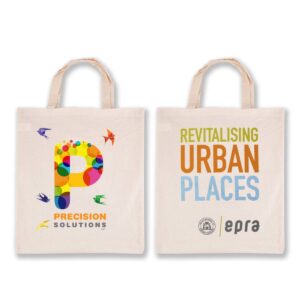
Custom tote bags
Practical for parents at events and library visits
Custom caps
Suit sports carnivals, house days and outdoor programs
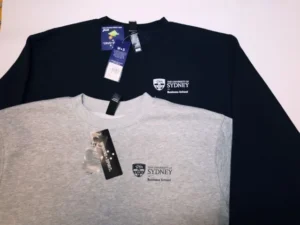
Custom T-shirts
Anchor anniversaries, house teams and carnivals
Custom notebooks
Useful for students, teachers and families
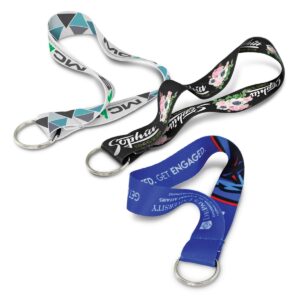
Custom keyrings
Easy to distribute at events and low in unit cost
Custom pens
Suit larger volumes at a lower price point
Noted that when ordering, you also need to match the item to your specific community as primary school parents buy differently to secondary school students, and a sports carnival calls for different merchandise to a 50-year anniversary campaign. For example, caps and drink bottles suit a sporting fundraiser, while a well-designed T-shirt in house colours suits an anniversary or house-team push.
Ariane Milarpez, another of our account managers, works closely with community, charity and government-related campaigns and handles many school orders. Her first question during quoting is rarely about the budget but who is actually using the item and where. She wants to know the age group of the buyers, whether the product will be pre-ordered or handed out at an event, and how the P&C plans to distribute it.
Small Changes That Improve Your Next School Fundraiser
Learning from experience, start your next fundraiser by reviewing where the previous campaign lost participation or profit, then correcting those specific points before launching again. That review alone tends to lift results without needing a full rebuild. A few practical adjustments to consider:
Set one clear target: give families the exact dollar amount and what it will fund
Cross-check the school calendar: avoid weeks with camps, excursions or uniform payments
Confirm the profit maths: calculate the sales required to hit the target and check that number against past participation
Simplify the buying process: keep ordering, paying and collecting to as few steps as reasonably possible
Choose merchandise with a genuine use: pick products your families will keep and reuse
Keep the product range tight: one or two strong items sell better than a full catalogue
Order to realistic demand: base quantities on past participation, using last year’s figures as your baseline
Close the loop after the campaign: tell your community what was raised and where the money went
Beyond the numbers, your fundraiser also performs better when families feel involved in the outcome. P&C Federation NSW describes fundraising as both a source of funds and a community-building activity, meaning the experience of participating in one campaign shapes whether the same families will show up for the next one. A campaign that felt transparent and worthwhile earns you the next round of support, while one that felt disorganised or unclear rarely does.
Our Expert’s Take
Even when the product, the audience and the margin are all right, a late delivery can undo the entire campaign. For schools working towards a term deadline or a specific event date, locking in the production and delivery timeline at the same time as the product decision is a MUST. Wendy Li, who is our General Manger, needs this information to be fixed to ensure the delivery schedule and merchandise reaches schools within 7 days Australia-wide.
FAQs
Why Is Our School Fundraiser Not Making Enough Money?
Usually one of five things, inlcuding lack of clear goals, the timing clashes with other school costs, the buying process has too many steps, the profit per item is too thin, or the sales target sits well above realistic participation. Start by calculating how many units your school actually needs to sell to reach the goal. That single check will show whether the plan is workable before you commit to an order.
What Products Work Well For School Fundraising?
Custom drink bottles, tote bags, caps, T-shirts, notebooks, keyrings and pens work reliably because your students and families already use them at home and at school. The strongest choice matches your audience, the event and the reason for fundraising, rather than being chosen only on unit price.
Swami Rossat is a Marketing Specialist at Cubic Promote with nearly seven years of experience across marketing, brand strategy, digital marketing and content. He also works with promotional merchandise and branded apparel, helping organisations choose products that support their audience, campaign goals and budget.
Swami’s expertise includes brand engagement, product selection, event marketing, corporate gifting and connecting merchandise campaigns with measurable marketing outcomes.
Follow Swami on LinkedIn