
Are Phone Chargers Safe? What Businesses Should Check
Last Updated: 29 September 2026
Key Points
- Low-quality phone chargers can overheat or become a fire risk if they lack proper certification.
- Certified chargers with tested components ensure better safety, compatibility, and reliable charging performance.
- We always recommend sourcing branded chargers from trusted suppliers to protect both your recipients and your brand reputation.
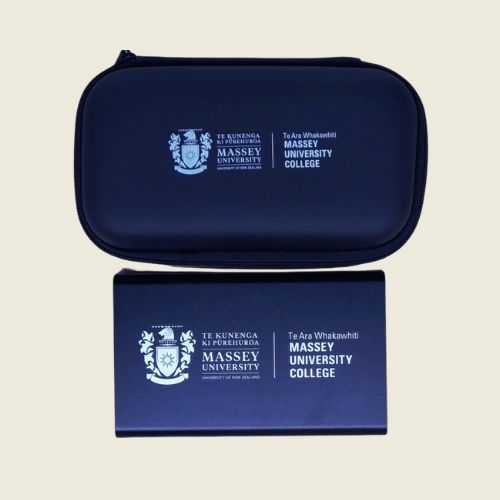
Chargers are one product where buying the cheapest available option can create unnecessary risk. Recipients may plug the product directly into a power point, leave it charging beside their bed, or carry it inside a bag every day. For businesses, that means product quality and compliance deserve much more attention than simply finding a charger with enough room for a logo.
First, know which type of charger you are buying
“Promotional phone charger” can describe several very different products.
That distinction matters because a battery-powered power bank is not regulated in exactly the same way as a charger that plugs directly into a 230V Australian power point.
What should you check on an Australian wall charger?
For mains-powered chargers, do not rely on overseas markings alone. ACMA warns that an overseas mark such as CE does not automatically prove that a product meets Australian requirements or can legally carry the Regulatory Compliance Mark. Australian suppliers have responsibilities around testing, records, registration and labelling. For applicable Level 3 power supplies and chargers, the EESS requires certification and equipment registration as well as RCM marking. Before ordering branded wall chargers, ask the supplier to confirm the relevant Australian compliance documentation.
Power banks deserve just as much attention
Power banks do not connect directly to mains electricity during normal output use, but their rechargeable lithium-ion or lithium-polymer batteries introduce a different risk. Some incidents involved serious burns and property damage after batteries overheated or caught fire. This is why capacity alone should never determine your order. A 10,000mAh model may sound impressive, but buyers should also consider:
- Battery cell quality
- Over-current, over-voltage, and short-circuit protection
- Input and output specifications
- USB-C, USB-A, or wireless compatibility
- Product testing and supporting documentation
- Instructions supplied with the product
- Previous recalls involving the model
Don’t assume “fast charging” works with every device
A charger can only provide the performance supported by the charger, cable, and receiving device. For example, one current Cubic Promote 10,000mAh power bank offers up to 18W Power Delivery output and USB-A and USB-C connections. Before branding hundreds of units, confirm what your recipients actually use. An older cable or incompatible device may not support the product’s maximum advertised charging rate.
Give recipients basic safety information
The ACCC recommends following the manufacturer’s instructions, storing lithium-ion power banks in a cool, dry location and using the correct charger. Power banks should not be charged on flammable surfaces such as beds, sofas or carpet.mRecipients should stop using a power bank if it:
- Becomes unusually hot
- Swells or bulges
- Leaks
- Appears damaged
- Vents gas
- Is subject to a product recall
Choosing the product carefully
Chargers put your company logo on an electrical or battery-powered product that recipients may use repeatedly. That makes supplier checks more important than saving a small amount on the unit price. For branded wall chargers, confirm the applicable Australian compliance requirements. For power banks, ask about the battery, protection features, testing, and specifications before approving the order.
Sources:
- ACMA, Know what you must do as a supplier: https://www.acma.gov.au/know-what-you-must-do
- EESS, Level 3 Electrical Equipment: https://www.eess.gov.au/registration/registration-in-scope-electrical-equipment/level-3/
- ACCC Product Safety, Power Banks Guide: https://www.productsafety.gov.au/consumers/be-safe-around-the-home/safely-use-batteries-and-technology/power-banks-guide