
Despatched vs Delivered: Why It Affects Your Deadline
If you’re preparing for an event, seeing the message “your order has been dispatched” might seem like the final step. However, that’s not the case. As you browse our site, you’ll notice two important terms: despatch date and delivery date. The despatch date is when your order leaves our warehouse, while the delivery date is when it arrives at your location. In this blog, we’ll break down the difference between these dates, how each one is calculated, and the potential stress that can happen in between.
What “Despatched” Actually Means
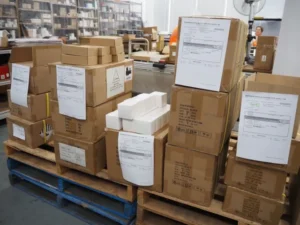
Despatch date means your order has passed branding, quality checks, and packing and is now with our local courier. It is the date when your order leaves the warehouse. After that, the delivery time depends on the courier’s schedule, regional transit times, and other factors that might affect deliveries that week. For more details on delivery timelines by region, see our lead times.
Stages Before Despatch Happens
Before a parcel is ever handed to a local courier, it moves through several internal steps:
- Artwork approval — final sign-off on logo placement, colours and sizing
- Production or branding — printing, embroidery, engraving or heat-transfer, depending on the product
- Curing or drying time — required for certain print methods before items can be packed.
- Quality checks — confirming branding is correct and consistent across the run
- Packing — preparing the order for handover to freight
How Despatch and Delivery Dates Are Actually Calculated
To help our clients, we always include a despatch date across all our category and product pages. But if you have placed an order, I suggest you coordinate with your account manager for the accurate date.
Calculating a Standard Despatch Date
The despatch date is set by adding up all the steps listed above, starting from when your order and artwork are confirmed:
- Order and artwork confirmation — day zero; the clock starts only once you sign off on sizing, colours, and logo placement.
- Production or branding lead time (takes 10 business days for standard or 24 hours for express options)
- Quality check and packing — usually the final one to two business days before handover to the courier
When you add up these steps from the confirmation date, you get the standard despatch date. If there’s a delay in confirming artwork, every step after that is pushed back by the same amount.
Calculating a Standard Delivery Date
After your order is despatched, the delivery date is worked out by adding the usual courier transit time for your postcode to the despatch date:
What Could Happen Between Despatch and Delivery
Once an order leaves our warehouse, it’s genuinely out of our hands and into the courier network, which is exactly where most of the unexpected delays creep in. A few things can affect a parcel between despatch and delivery:
- Peak-period congestion — end-of-financial-year and the pre-Christmas rush push extra volume through every courier’s sorting facilities, slowing everything down.
- Weather disruption — flooding, storms or bushfires can close regional routes or delay flights carrying freight.
- Public holidays — these reduce the number of courier runs in a given week, particularly outside metro areas.
- Missed delivery attempts — if no one is available to receive or sign for the parcel, it can be returned to a depot and rescheduled
- Incorrect or incomplete address details — even small errors can send a parcel to the wrong depot or require manual re-routing
- Sorting facility backlogs — higher-than-usual freight volume across the network can add a day or two even without anything going visibly wrong.
We can’t control any of these issues once a parcel has left the warehouse. That’s why building in a buffer before despatch is so important. It’s the best way to protect yourself from delays that happen after the order is out of anyone’s hands.
How I Keep Dispatch Dates Reliable
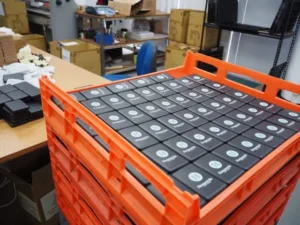
When a client asks when their order will be handed off to the local courier, I always provide the most realistic date possible. While it’s good to estimate an earlier time, there could be delays during production that might affect and cause delays. To ensure dates are met, I track every order. I have to make sure production, branding, and freight are all organised so dispatch happens early enough to handle any courier delays.
How to Protect Your Event Deadline
A few practical habits can make the time between dispatch and delivery much easier to plan for:
- Ask for a dispatch date, not just a delivery estimate, and treat that as your real deadline.
- Build in a buffer of at least a few business days between expected delivery and your event date.
- Flag peak periods early — end-of-financial-year and the pre-Christmas rush put extra pressure on courier networks.
- State your event date upfront so it can be factored into the production schedule from day one, rather than left to the freight stage.
- Ask how delays are communicated — a good supplier flags problems proactively rather than leaving you to discover a late parcel on the day.
Building Your Order Timeline Backward From Event Day
The best way to plan is to start with your event date and work backward. Think about courier transit, then dispatch, then packing, then production, and finally artwork approval. The date you get from this process is when you truly need to place your order, not just when you’d like to. The clearer you are about your real deadline, the better your supplier can add the right buffers at each step. This helps ensure “despatched” becomes “delivered on time,” not last-minute stress.

Ready To Buy?