
Logo on the Sock or the Label? What We Recommend and Why
We can brand the logo directly on the socks and on the label. Most clients who ask about socks ask this question. Where the logo goes affects the decoration method, minimum order, lead time, and how long the branding lasts. In this blog, we’ll share the pros and cons of branding your logo on the socks themselves versus on the attached label to help you decide what to choose for your campaign.
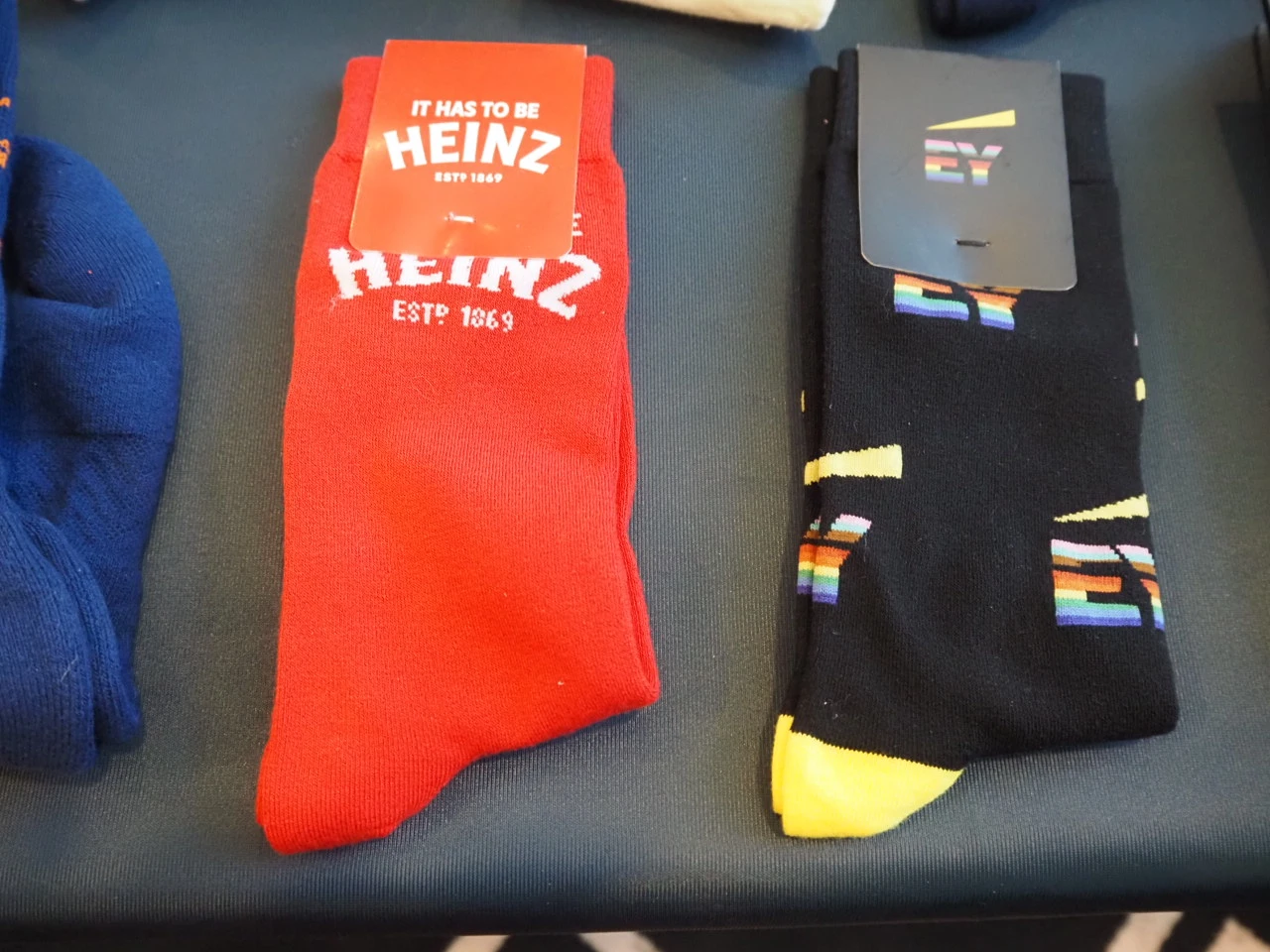
Your branding options at a glance
Why the knit matters more than people expect
Knitting a logo is a different discipline from printing one. The yarn works like a grid, so fine lines, thin fonts, and small text get lost or come out jagged. I usually simplify a logo before it goes to sample. That might mean:
- Reducing the number of colours
- Dropping a tagline or small wording
- Thickening thin strokes
- Using a logo mark instead of the full wordmark
Katherine Durham, one of our account managers, mentioned that one of her clients worried this would water down the brand. In my experience, a clean, simplified mark that reads properly looks far better than a detailed logo that blurs.
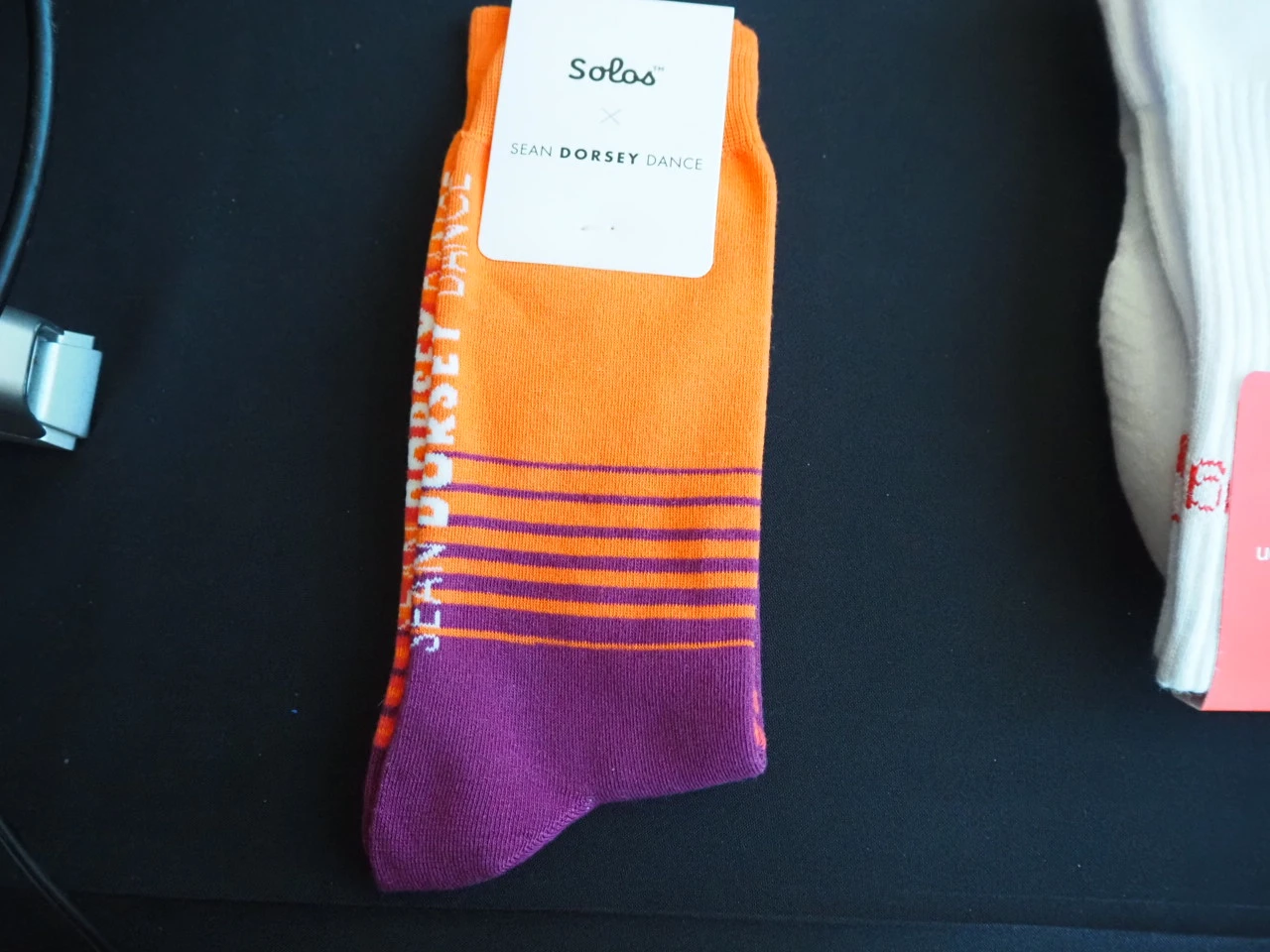
When we recommend putting the logo
- Staff uniforms and team kits: the sock is part of the uniform, so the brand should stay on it after the first wash
- Sports clubs and fun runs: colours and logos help with team identity
- Brand activations: when the sock itself is the talking point
- Long-term giveaways: a knitted logo keeps working every time the sock is worn
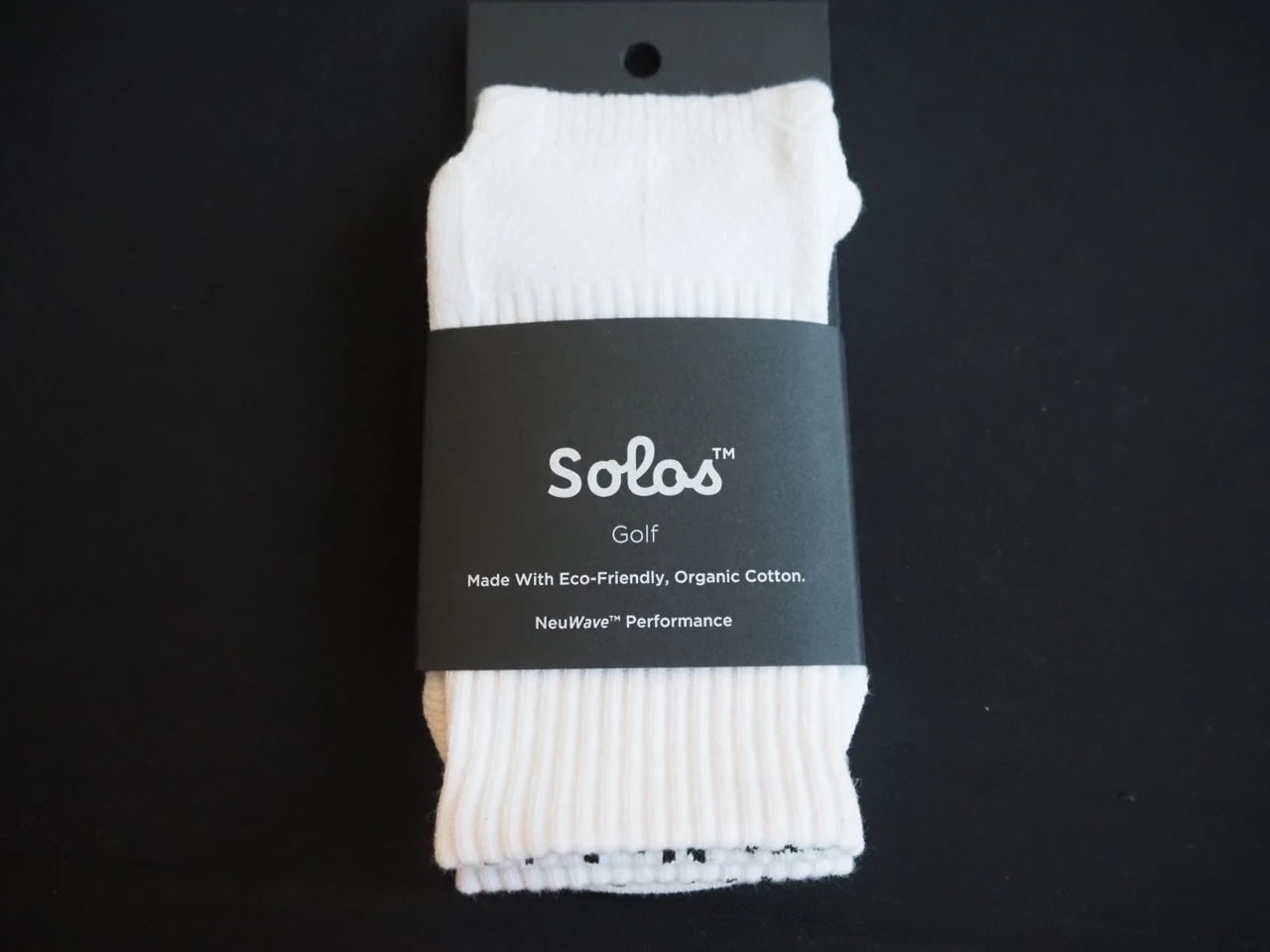
When we recommend the label instead
- Client gifts: a plain, good-quality sock with a branded band feels more personal than a logo-covered one
- Premium or retail-style merch: most people won’t wear a big corporate logo on their ankles, but they will wear a nice sock
- Mixed audiences: a neutral sock suits more people and gets worn more often
- Tight timelines: custom packaging on a stock sock is usually quicker than a custom knit
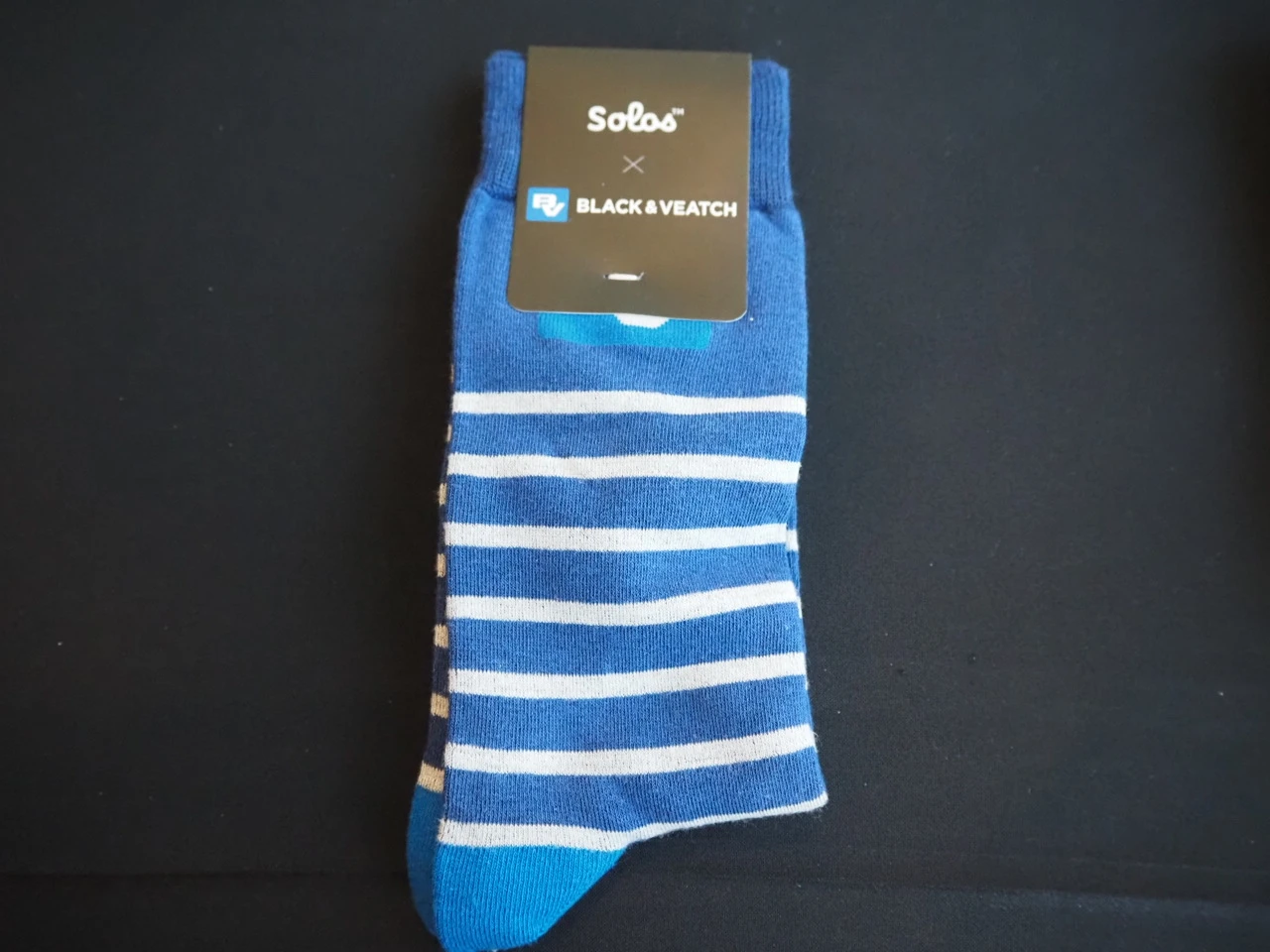
The combination we suggest most often
For most corporate clients, the best result is both, done lightly:
- A small knitted logo on the cuff or sole
- A branded band or header card on the packaging
- Brand colours worked into the sock pattern rather than a large logo.
The packaging does the brand introduction when the sock is handed over. The small knitted mark keeps it visible afterwards, without making the sock feel like a promotional item.
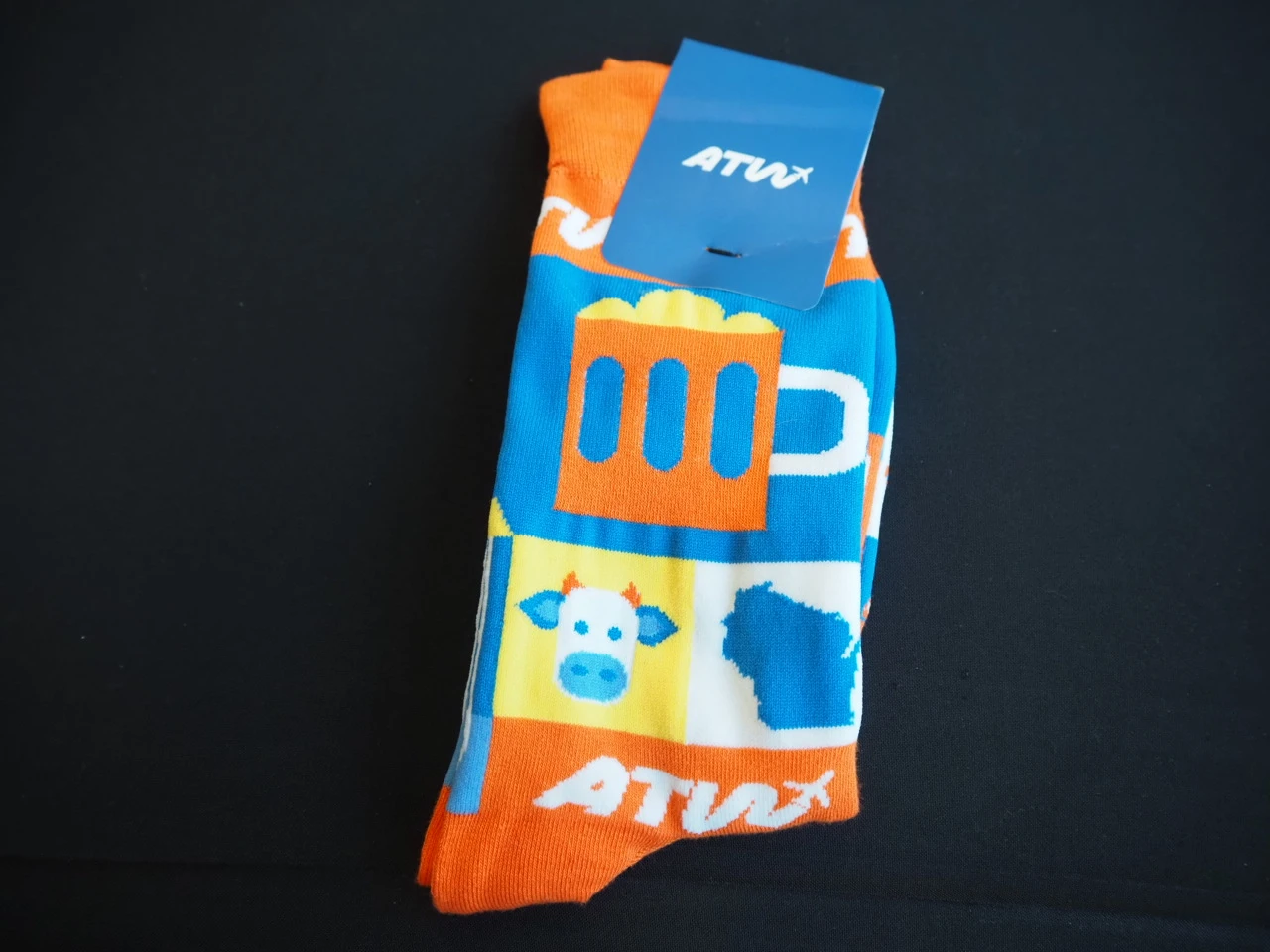
Match the choice to the job
What I Prefer
I have seen both printing on socks and on labels. Both are great options, but I’d recommend one over the other in certain use cases. For example, a client wants novelty items. Then printing your logo all over the socks makes a great novelty giveaway at events. If it’s for uniforms, I suggest you keep the logo minimal. Keep it on the sock, but only on the upper side. But if you’re handing it out as part of a gift set you’re curating for your VIPs, go minimal and print your logo on the label.
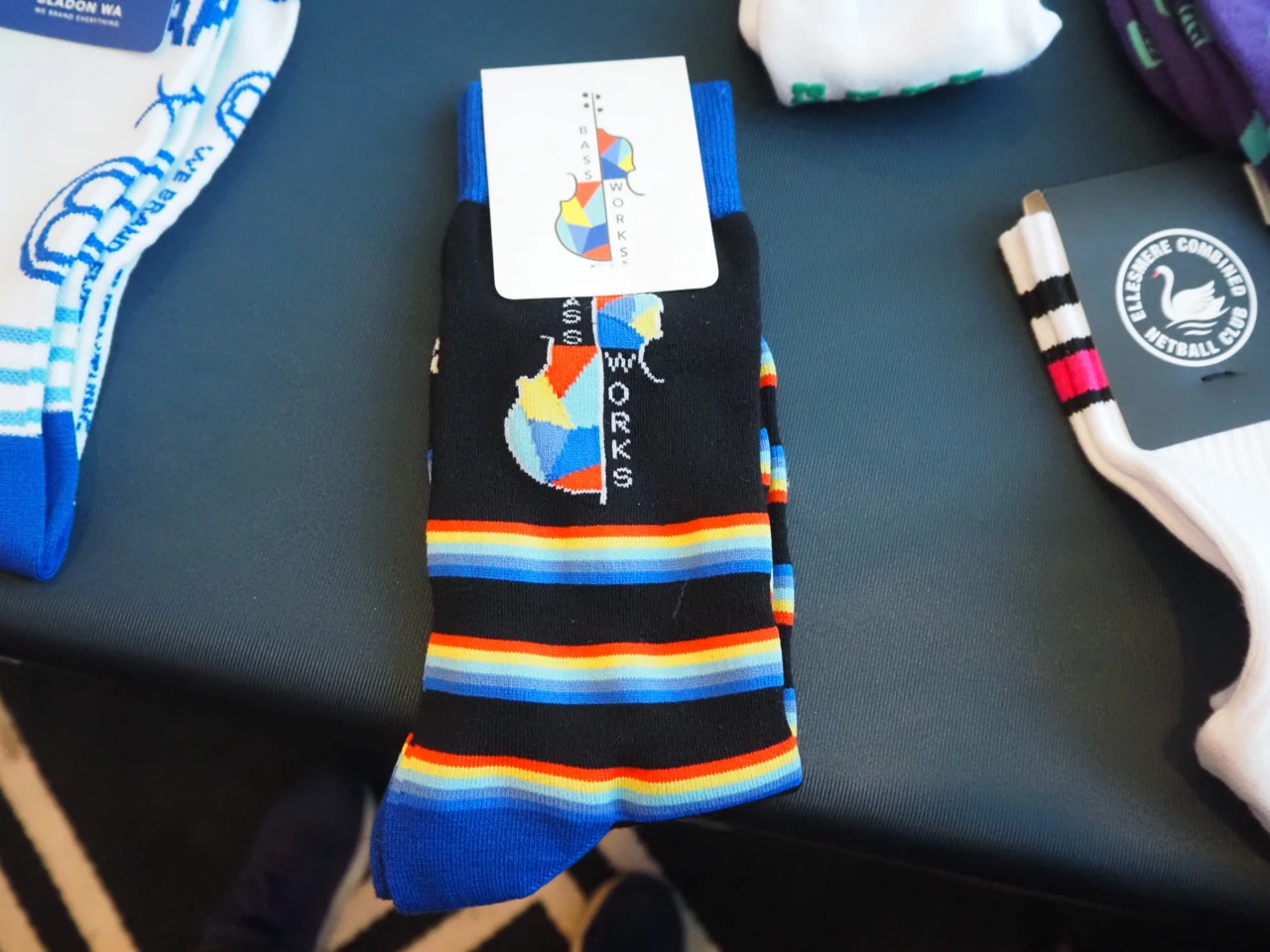
What Clients We’ve Worked With Prefer
We have worked with a lot of clients who have different preferences on where to put their branding on the socks. Here are some great examples:
- LawConnect in Sydney
- Quantexa
- The Sebel Resort & Spa Hawkesbury Valley
- MLC School
- Virgin Active Australia
- Chill IT
- The Kids’ Cancer Project
4 of them chose to put their logo on the socks. While Chill IT and The Kids’ Cancer Project chose socks with creative designs and have their logo on the label.
Before you lock it in
- Ask for a digital mock-up of the knitted logo, not just your original artwork.
- Request a physical sample if the order is large or the logo is detailed.
- Check sizing ranges, especially if socks are going to a mixed team.
- Confirm lead times early, as custom knits generally take longer than printed or packaged options.
One last thing. Once a knitted run is in production, it can’t be changed or cancelled, so make sure everyone who needs to sign off has seen the sample first. Late changes are the main reason sock orders run into trouble. If you’re not sure which option suits your order, send through what the socks are for and roughly how many you need. That’s usually enough for us to point you in the right direction.
Ready To Buy?