
How to Reuse Packaging and Shipping Boxes from your Orders
Last Updated: 30 September 2026
Key Points
- Reusing packaging like cardboard boxes helps reduce waste and gets more value from each order.
- Boxes can be repurposed for storage, shipping, or simple office organisation.
- We suggest reusing or recycling packaging where possible as part of more sustainable campaigns.
When you order 2,000 units or more from us, you may be left with a few boxes after you unbox and give them all out. For example, if you order polo shirts, we may package them separately to separate the sizes. Drink bottles are also packed in individual protective boxes. Once everything is unpacked, businesses are often left with a pile of cardboard boxes. Before sending them straight to recycling, check whether some of those cartons can have another useful life.
Keep the Best Boxes for Your Next Event
Event teams regularly need cartons for transporting:
- Promotional merchandise.
- Brochures and flyers.
- Tablecloths.
- Banners.
- Name badges.
- Extension leads.
- Samples.
- Display equipment.
The boxes your merchandise arrived in may already be the right size for the job. After the event, they can also be used to bring unused stock back to the office. If your team attends conferences or exhibitions regularly, label reusable cartons by purpose so the next pack-up is easier.
Store Spare Promotional Merchandise
Many businesses do not distribute an entire merchandise order immediately. You may keep stock for future:
- Client meetings
- Sponsorships
- Employee onboarding
- Trade shows
- Sales visits
- Replacement uniforms
- Last-minute marketing opportunities
Reuse Boxes for Internal Shipping
Businesses with multiple offices, teams, or events may regularly move products from one location to another. Clean cartons can be reused for:
- Sending product samples
- Moving merchandise between departments
- Shipping uniforms to remote employees
- Sending event stock to another location
- Returning suitable products to storage
Before reusing a shipping box externally, remove or completely cover old:
- Courier labels
- Barcodes
- Customer names
- Addresses
- Tracking numbers
- Internal order information.
This avoids confusion and helps protect customer and business information.
Save Useful Packing Materials Too
The cardboard carton is not always the only reusable part. Orders may include:
- Cardboard dividers
- Paper void fill
- Protective sleeves
- Bubble wrap
- Tissue paper
If your business regularly sends parcels or samples, these materials can sometimes be stored and used again. There is a limit, though. Keeping every piece of packaging “just in case” can quickly turn a storeroom into another problem. Save the materials you realistically expect to use and recycle the rest appropriately.
Give Clean Boxes a Second Life Elsewhere
If your office has more boxes than it can use, another organisation may want them. Depending on their condition, cartons may be useful to:
- Schools for art projects
- Community groups
- Charities
- Employees who are moving house
- Teams preparing displays or events
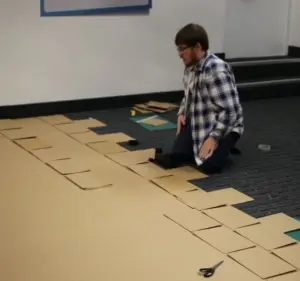
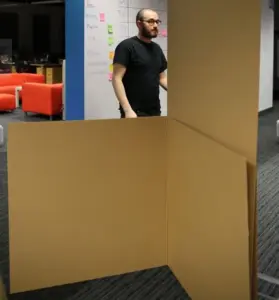
The original version of this article even featured office workers who built an enormous cardboard castle complete with towers and a drawbridge. You probably do not need to go that far. But it does show that cardboard can remain useful long after the original products have been unpacked.
Avoid Reusing Boxes That Are No Longer Safe
Not every carton should be saved. Recycle boxes when they are:
- Wet.
- Mouldy.
- Heavily crushed.
- Torn around the base.
- Contaminated with food or liquids.
- Too weak to protect another shipment.
A box that fails during transport can damage the products inside, so reuse should still be practical. Flattening unwanted cartons also saves storage space and makes recycling easier.
Think About Packaging Before You Order
Packaging can also be discussed before your promotional merchandise goes into production. For larger orders, ask your supplier how products will be packed and whether unnecessary individual packaging can be reduced where practical. You can also request sensible packing arrangements. For example, staff apparel might be separated and labelled by size, while event merchandise can be divided according to location or distribution group. That makes unpacking faster and may reduce the need to repack everything afterwards.
Reuse First, Recycle When It Makes Sense
The most useful approach is simple. Keep the strong boxes you know you will reuse. Put them to work for storage, events and future shipping. Recycle damaged or unnecessary cardboard rather than filling the storeroom with packaging that nobody will ever need. Promotional merchandise does not stop creating waste once the products arrive, so thinking about what happens to the packaging is a small but practical part of planning a more considered order. Built on panels measuring 2m x 1m, smaller cardboard panels, 480 in number, were placed to mimic stonework. Hot glue was used to stick the castle together, with over 80 sticks of glue used to weld everything together.
Originally seen on: https://www.boredpanda.com/giant-cardboard-castle-office-karl-young/