
Client Impressions: Promotional Items vs Digital Marketing
What Actually Sticks in Australian B2B Environments?
Most B2B marketers in Australia rely on digital channels because they are measurable, immediate, and easy to justify to stakeholders. Metrics such as impressions, clicks, and cost per lead are available within hours. However, there is a critical distinction: visibility does not equate to memorability. In B2B environments, where sales cycles are lengthy, lasting impressions influence decision-making.
The true comparison is not digital versus merchandise. It is short-term attention compared to long-term brand presence.
The Structural Difference That Drives Everything
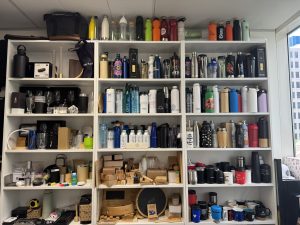
Digital marketing provides temporary exposure. Once spending ceases, visibility ends immediately. Promotional products provide exposure. Once distributed, they continue to generate impressions in workplaces, meetings, and daily routines. That matters in Australia’s B2B environment, where:
promotional products
- Sales cycles are long.
- Procurement involves multiple stakeholders.
- Trust builds slowly over repeated exposure.
If your brand loses visibility after a campaign concludes, you must continually rebuild awareness from the beginning.
What Australian Data Actually Shows?
APPA (Australasian Promotional Products Association) data consistently shows that physical branded items outperform digital impressions in both retention and recall.
- Fifty-five percent keep the item for over 12 months. Many keep the item for over 12 months, often longer.
- Fifty-two percent of recipients, report a more positive perception of the company after receiving a promotional product.
- The cost per impression can decrease to approximately $0.001, making promotional products among the most cost-effective advertising channels.
Zoom out further, and the trend strengthens. Across Australia and similar markets:
- Around 80% of people keep promotional items for over a year.
- Consumers are significantly more likely to develop a positive opinion of a brand after receiving a physical item compared to viewing online advertisements.
This is the key difference: promotional products don’t just reach people—they stay with them.
What That Looks Like in Real B2B Use?
The value of theory is demonstrated when it is supported by real-world scenarios, which is the case here.
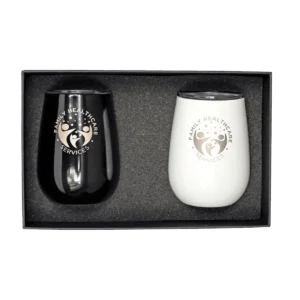
1.A printed mug gift set placed on a Sydney office desk provides more than a single impression:
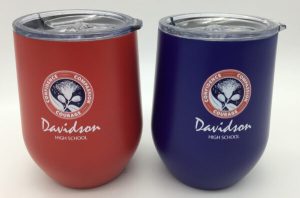
It is used daily and remains visible during meetings, calls, and routine work. Over one to three years, this results in hundreds or even thousands of passive brand impressions.
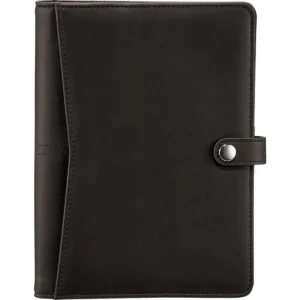
2.A branded compendium used in client meetings operates differently: It signals organisation and professionalism and is seen by multiple stakeholders. Your branding becomes associated with credibility as well as awareness.
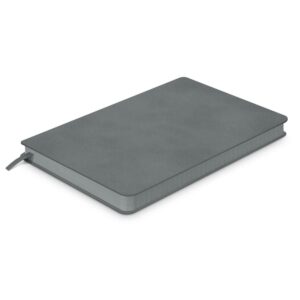
3.Even something simple like a branded notebook:
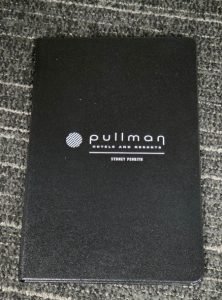
It is used during important activities such as planning, taking project notes, or internal meetings. Each use reinforces your brand in a meaningful context, providing more than passive exposure.
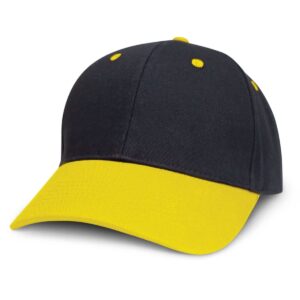
4.Then you have visibility-driven items like promotional caps:

Common among construction, logistics, and field teams in NSW and QLD, these items circulate through various environments daily. A single item can generate exposure across multiple locations, not just one workspace.
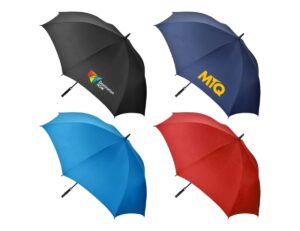
5.And high-visibility products like golf umbrellas: These products offer large branding areas, public use, and long lifespans. A single use in a crowded outdoor setting can attract more genuine attention than many digital impressions.
Across all these examples, the pattern remains consistent: Impressions continues long after distribution.
The Cost Reality Most Marketers Get Wrong
The standard comparison of cost per click versus cost per item is flawed. The correct metric is cost per impression over time.
After 12 to 24 months of use, the effective cost per impression decreases to approximately $0.001. Digital doesn’t behave like that.
- You pay continuously for visibility.
- Costs rise with competition.
- Impressions stop the moment you stop paying.
Promotional products reduce costs over time, while digital marketing increases costs as time progresses.
Why Physical Products Change Behaviour?
There is a psychological advantage that digital marketing cannot replicate. Physical items create:
- a sense of ownership
- perceived value
- Repeated, passive exposure without resistance
This explains why recipients respond differently. Research shows people are far more likely to form positive brand opinions after receiving a promotional product than after seeing online advertising. Digital ads interrupt. Promotional products integrate.
Where Digital Still Matters?
Digital marketing still plays a critical role in Australian B2B. It’s effective for:
- reaching new audiences quickly
- targeting specific job roles
- generating initial enquiries
However, digital marketing operates at the top of the funnel. It creates awareness rather than lasting brand presence.
The Smarter Strategy (What Actually Works)
The most effective B2B campaigns do not choose between digital and promotional products; they use them in sequence.
Use digital to get attention. Use promotional products to hold it. A Sydney consultancy targeting procurement teams might run LinkedIn campaigns, then follow up with a branded compendium or notebook sent directly to decision-makers. As a result, the brand remains present after the initial click, staying visible in the workplace for the next six to twelve months.
Final Position
Digital marketing delivers speed. In Australia’s B2B environment, where relationships, repetition, and trust drive outcomes, short bursts of visibility are insufficient. The visibility is not enough. If your marketing disappears when your budget ends, you must continually rebuild awareness.
If your brand remains on your client’s desk, in their meetings, or in their daily routine, you continue to generate impressions without additional cost. That’s the key takeaway: Promotional products create lasting impressions and compound brand presence in a way digital marketing cannot match.
Ready To Buy?
Sources
APPA Official Website
Cubic Promote: Promotional Product Statistics (Australia)
APPA Industry Data Summary (Retention & Recall)
Promotional Merchandise Research Overview