
Offline Marketing Tools That Make B2B Buyers Remember You
Most B2B buyers are tired of seeing ads everywhere online. What they really need is a reason to remember your brand. In today’s podcast, Charles Liu, founder of Cubic Promote with more than 20 years in promotional products, talked with Jasmine Liu, the Chief Financial Officer, about offline marketing tools that still work for B2B campaigns.
Listen to this episode of The Promo Playbook here: What Actually Gets B2B Buyers to Respond.
Why is merchandise still the most powerful?
Branded giveaways and corporate gifts are still among the most practical marketing tools. Charles said it simply in the podcast: “Promotional products are the only tangible physical marketing asset that is available to marketers right now.” His point is that digital ads often require ongoing spending, while giveaways can attract repeated attention simply by being used.
This is especially true if the merch you hand out matches the setting. Here are some of the best merch for different events:
- Pens, lanyards, and tote bags for trade shows
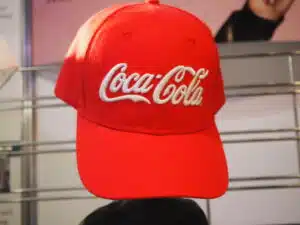
- Drink bottles, caps, and sunscreens for outdoor events
- Premium tumblers and cheeseboards as gifts for VIP clients
- Hoodies, drink bottles (or a mug), and headphones for onboarding
Jasmine also shared some practical ways to distribute products, such as sending them by mail, handing them out at expos or on the street, or giving them away in offices or at the point of sale. These methods work because the branded item goes straight into the recipient’s hand instead of fighting for attention online.
Mary Aguirre, one of our account managers, says the best product recommendations come from knowing the buyer’s branding, budget, and goals. She looks past the cheapest option and thinks about how the item will be used after the campaign.
How Can Cafes Turn Merchandise Into Local B2B Exposure?
Cafes can be useful offline marketing channels because they bring local business audiences together every morning. In the podcast, Charles and Jasmine discussed two cafe-based ideas: a branded business card jar for lead generation and custom-printed coffee cups for local brand visibility. Both work because they place your brand where your target audience already spends time.
Branded Business Card Jars To Collect Leads
Instead of a standard tip jar, a business places a branded jar on the counter and invites customers to drop in a business card for the chance to win a week of free coffee. At the end of the week, the winner receives the prize, and the business has a small pool of local prospects to contact.
This works best when the location matches the buyer profile. Jasmine pointed out that Surry Hills in Sydney may attract creative and digital professionals, while areas around Castlereagh Street may reach lawyers, solicitors, and barristers. A similar approach could work around Melbourne CBD office towers, university campuses during orientation week, or conference venues during major industry events.
Use Custom Coffee Cups As Local Merchandise
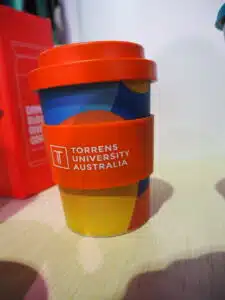
The second idea is merchandise-led. A business supplies the cafe with free paper coffee cups customised with a logo or short message. The cafe receives useful stock, while the brand travels with each takeaway coffee through nearby offices, campuses, and event precincts.
The design matters because people carry takeaway cups in public. A logo, short message, QR code, and clear colour contrast usually work better than filling the cup with too much information. For example, a recruitment firm near Barangaroo could use a short hiring message, while a university campaign could use a brighter design for open day registrations.
Keep Cafe-Based Campaigns Simple
For cafe-based campaigns, we suggest keeping the execution clean:
- Use a simple offer, such as a free coffee prize.
- Make sure the branding is catchy (logo or phrase) or minimal.
- Match the cafe location to your ideal audience.
- Follow up with entrants respectfully.
Why Do Uniforms Still Matter?
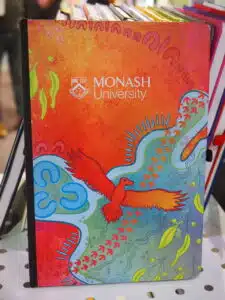
Uniforms help a team look organised before anyone even speaks. This is particularly important at corporate events, open days and community campaigns. Charles explained that teams need something visual with branding. He mentioned uniforms, T-shirts, hoodies, and corporate wear as practical ways to create daily brand exposure. This is why, when we attend trade shows, we make sure the staff at the booth wear branded polo shirts with our logo.
Starting Outreach Calls with Real Conversations
Cold calling is tough because buyers aren’t expecting your call. Charles suggested a different approach: reach out to a prospect to interview them for a podcast or a short business feature, rather than starting with a sales pitch.
This only works when the intent is genuine. The interview should be real, professional, and respectful of the person’s time. Charles noted that even one or two strategic questions can create a warmer introduction if the prospect is busy.
For B2B marketers, the lesson is not “use a podcast as a trick.” The lesson is to create a reason for a meaningful first conversation. People are often more open to discussing their work, expertise, and industry views than listening to an immediate sales pitch. A good outreach call should:
- Name the person and why their perspective is relevant.
- Ask for permission before recording or publishing anything.
- Keep the conversation short if they are busy.
- Follow through on what was promised.
- Let the commercial conversation happen naturally, if appropriate.
This strategy has worked for us, and we believe this could work for professional services, consultants, industry associations, and brands that already publish useful content.
How To Choose The Right Offline Marketing Tools?
If you ask us, we’d ask you first: what is your goal? Is this for lead generation, as event giveaways, or to nurture relationships with key clients?
Where Do Digital Tools Fit After Offline Marketing?
Digital tools should support offline marketing, not replace it. We use tools like LinkedIn outreach, SEO research, cold email, and contact databases at Cubic Promote. These can help find prospects and keep the conversation going, but they work best after you’ve made a strong offline impression.
A practical B2B campaign might look like this:
- Identify the target audience online.
- Send a physical mailout or invite them to an event.
- Hand out a useful branded product.
- Follow up through email or LinkedIn with context.
The merchandise gives your follow-up a reason to stand out. For example, we attended a trade show in Sydney last year. After the trade show, we asked our account managers, Swami Rossat and Mark Tyssen, to follow up on those leads. Because we handed out merch for them during the event, they were able to recall us, and most of them placed an order.
What Is The Best Offline Marketing Tool?
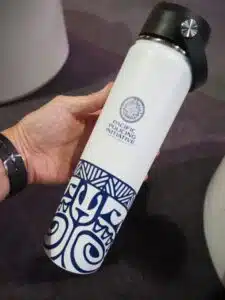
The most powerful tool for offline marketing is still branded giveaways, whether it be hoodies, staff uniforms, sticky notes you handed out at a trade show, or coffee cups you supplied for a local cafe. The winning formula is simple: know your audience, decide what action you want, choose a product that fits the situation, and keep the branding simple. Offline marketing works best when the recipient feels the item fits naturally into their day.
If you want to get personalised recommendations on what merch to give out for an upcoming event or marketing campaign, reach out to us now!
