
What Marketing Managers Want from Promotional Products Suppliers
Last Updated: 4 Sept 2026
Good customer service is the #1 one reason marketing managers choose and return for repeat orders, survey by Cubic Promote on 37 Australian marketing managers and coordinators.
Survey Snapshot
Key Findings
- 81% of respondents would consider a supplier with excellent customer service.
- 59% said service or turnaround was the main reason they would return to the same supplier.
- 73% of respondents would pay slightly more for faster delivery and hands-on account management.
- Most respondents wanted suppliers to clarify lead times and be more proactive with order updates.
Which Factor Matters Most When Buyers Choose a Supplier
During the phone interviews, we asked marketing managers and coordinators to choose three out of five factors that would make them want to work with a promotional merchandise supplier. Customer service ranked highest, with 81% of respondents believing a supplier with good service will be highly considered for partnership.
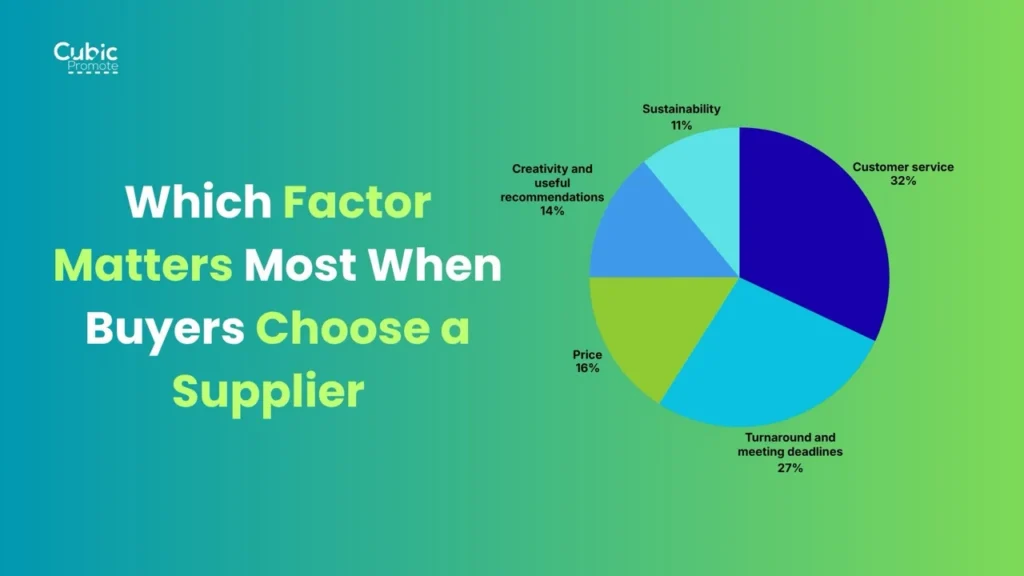
The top three factors marketing managers value most when choosing a supplier are customer service, turnaround, and price. Almost half also valued creativity, particularly when suppliers can build on the initial brief with stronger ideas and relevant product suggestions. Surprisingly, having sustainable product options played a smaller role in supplier selection, with 11 respondents identifying sustainability as one of their key priorities.

What Makes Buyers Stay Loyal with a Supplier
For this part of the survey, we asked respondents to choose the one reason most likely to make them order from the same supplier again. Customer service remained the top consideration, while on-time delivery followed closely, as it shows buyers that the supplier is credible and trustworthy.
While pricing used to be one of the top 3 factors when choosing a supplier, it is no longer the main reason they remain loyal. Instead, 12 out of 37 respondents believed that a supplier with service and quick turnaround will most likely be chosen for the next orders.
Our General Manager, Wendy Li, focuses on keeping large orders on schedule and solving delivery issues before they reach the client. For her, this starts with setting the right expectations around timing. If a supplier promises a three-day dispatch, that should mean the order leaves within three days, not that it arrives within three days. The supplier also needs to account for freight time and any potential delays before providing the client with a realistic arrival date.
What Buyers Care Most About In The Briefing Section
We also asked respondents what they usually want to know first during the briefing or quoting stage. Most marketing managers prioritise clearing two things: whether the supplier can deliver on time and which product ranges are available within the budget offered.
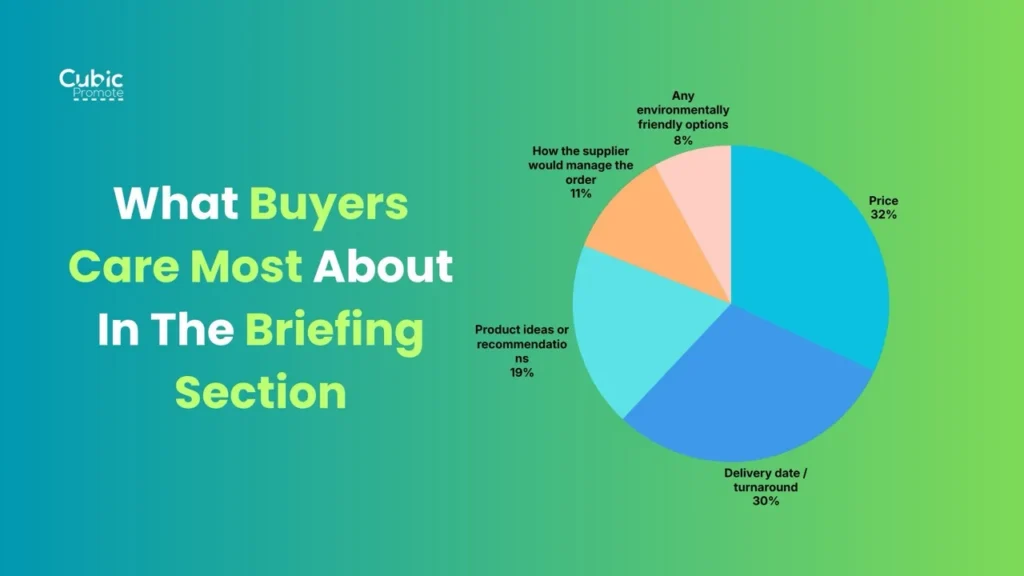
During the briefing stage, before asking how much a client can spend, our account managers will dive deep into the client’s audience, quantity, and purpose of the order. We believe that even an expensive product can be the wrong choice if it does not suit the people receiving it or the purpose for which it is being used. Once the goals are clear, we sort out the list of the most suitable products for both goals and budgets.

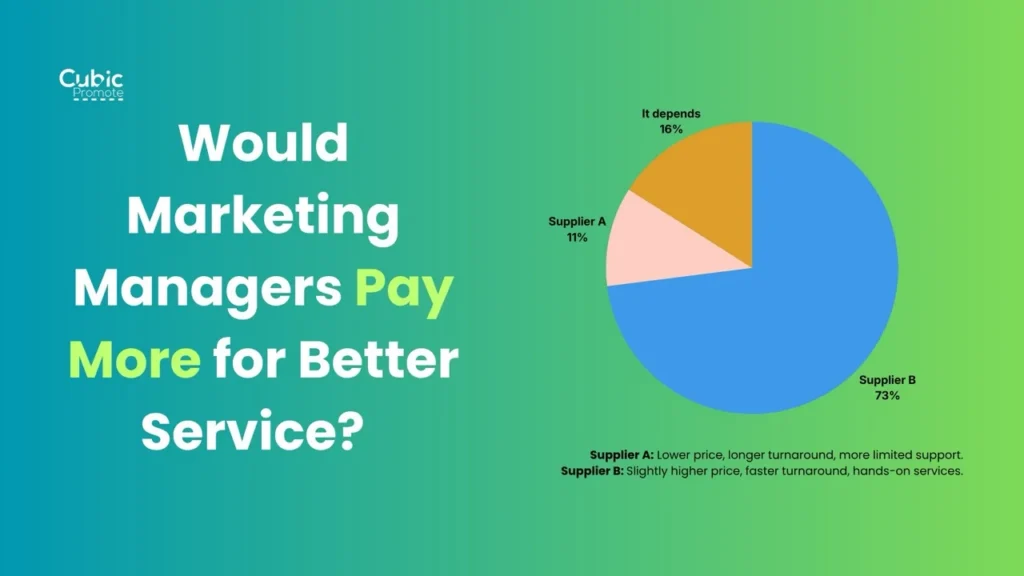
Would Marketing Managers Pay More for Better Service?
For this part, we asked them to choose between two common supplier cases:
- Supplier A: Lower price, longer turnaround, limited support.
- Supplier B: Slightly higher price, faster turnaround, hands-on service, wider range of products.
And yes, 73% of respondents are willing to pay more for a supplier that commits to faster delivery and hands-on account management.
“No matter how cheap or expensive the unit price is, it means very little if the supplier cannot deliver the right quality on time,” says Cubic Promote account manager Shealeigh Keeney. That is why she focuses on managing the whole job properly from the start by making sure the brief is clear, the right product is chosen, and expectations are set early, so the client spends less time chasing updates or fixing problems later.
What Buyers Wish Suppliers Did Better
For the last question, we asked them for their opinion on one thing they wish suppliers could do better, most agreed that suppliers should be clear with the lead times and provide more proactive updates on the order’s progress.
Clear lead times mean giving clients the realistic timeline of each stage of the order and how they are processing with the order. As our account manager, Regina Mangubat focuses on keeping clients clear on what is needed and when. She also knows that late changes, unclear feedback, and delayed approvals can push timelines back. That is why she sees good communication as a two-way process: the supplier needs to keep the client updated, and the client needs to make decisions on time.

What Can You Take from This Survey
After the survey, the below are lessons to make marketing managers, account managers, and internal teams easier for your team when working with suppliers:
- Give the supplier detailed context before asking for product ideas: Marketing managers should share the audience, quantity, budget, deadline, purpose and branding needs at the start. This gives the supplier’s account manager enough information to recommend products that most align with expectations.
- Confirm the full timeline at the briefing stage: Marketing managers should ask for the artwork deadline, approval date, production time, dispatch date and expected arrival date. Clear dates make planning for events and campaigns easier.
- Keep the client updated at every key stage: Account managers should confirm stock, artwork approval, production progress, dispatch and expected arrival. Early updates help the client plan their next step.
- Keep approvals moving on the client side: Marketing teams should assign one person to collect feedback and approve artwork, quantities and final details. Quick decisions help the supplier keep production on schedule.
- Use the brief to improve the final idea: Account managers should suggest suitable products, branding methods, logo placement, and alternative options that align with the audience, budget, purpose, and deadline. This turns the supplier’s experience into something useful for the campaign.