
Next Year’s Conference Merch Trends: What Will Matter in 2026? (and What Won’t)
Last Updated: 15 April 2026
Key Points
- Conference merch in 2026 works best when it’s practical, lightweight, and easy for people to carry around all day.
- Items like charging cables, bottles, notebooks, and sturdy tote bags get kept because people actually use them.
- We suggest focusing on fewer, more useful items so your brand stays with attendees well after the event.
Conference merchandise has quietly changed over the last few years, not because organisers suddenly cared less about giveaways, but because audiences have become far more selective about what they keep, use, and remember long after the lanyards come off.
As we head into 2026, industry expos and trade shows are no longer judged by how much merchandise is handed out, but by how intentional it feels. Attendees expect relevance. Sponsors expect visibility that lasts beyond the event floor. Organisers are under pressure to balance budgets, sustainability goals, and brand experience — all at once. Together, these paint a very clear picture of where conference merchandise is heading — and where it’s quietly being left behind.
This guide brings together three data perspectives to outline what conference merch will actually look like in 2026:
- Cubic Promote internal order trends from Australian conferences and expos
- Insights from our 100-responder Australian survey on promotional products
- Broader industry research and global conference merchandising patterns, adapted for the Australian market.
The Big Shift: From “Free Stuff” to Functional Visibility
The most important trend heading into 2026 is not a specific product category, but a mindset change. Conference merchandise is no longer about novelty or volume; it is about usefulness, portability, and repeated brand exposure in everyday settings. Attendees today move quickly between sessions, venues, and cities, often carrying minimal luggage and expecting conference items to integrate seamlessly into their existing routines.
As a result, products that feel heavy, impractical, or redundant are increasingly ignored, while items that solve small, everyday problems continue to perform well. From Cubic Promote’s internal data, lightweight, desk-friendly, or travel-ready conference merchandise consistently records higher reorder rates and fewer post-event complaints from organisers.
What’s Growing vs What’s Fading in 2026?
The clearest way to understand conference merch trends is to look at what is accelerating — and what is quietly disappearing. This shift reflects a broader expectation: conference merchandise should feel intentional, not promotional for its own sake.
| Category | What’s Growing? | What’s Fading? |
|---|---|---|
| Tech accessories | Multi-use cables, compact charging kits | Single-purpose gadgets |
| Desk items | Microfibre cloths, notebooks, pens | Novelty desk toys |
| Drinkware | Lightweight bottles, practical mugs | Bulky or fragile items |
| Carry items | Totes with structure and durability | Thin, disposable bags |
| Apparel | Simple, neutral event tees | Loud, over-branded shirts |
| Sustainability | Aussie-made, traceable materials | Vague “eco” claims |
Tech Isn’t Dead — But It Has to Be Smarter
Tech merchandise continues to perform strongly at conferences, but only when it solves a real problem. According to Cubic Promote’s internal data, charging cables and compact tech kits remain among the most reordered conference items because they work across devices, travel well, and are used long after the event ends.
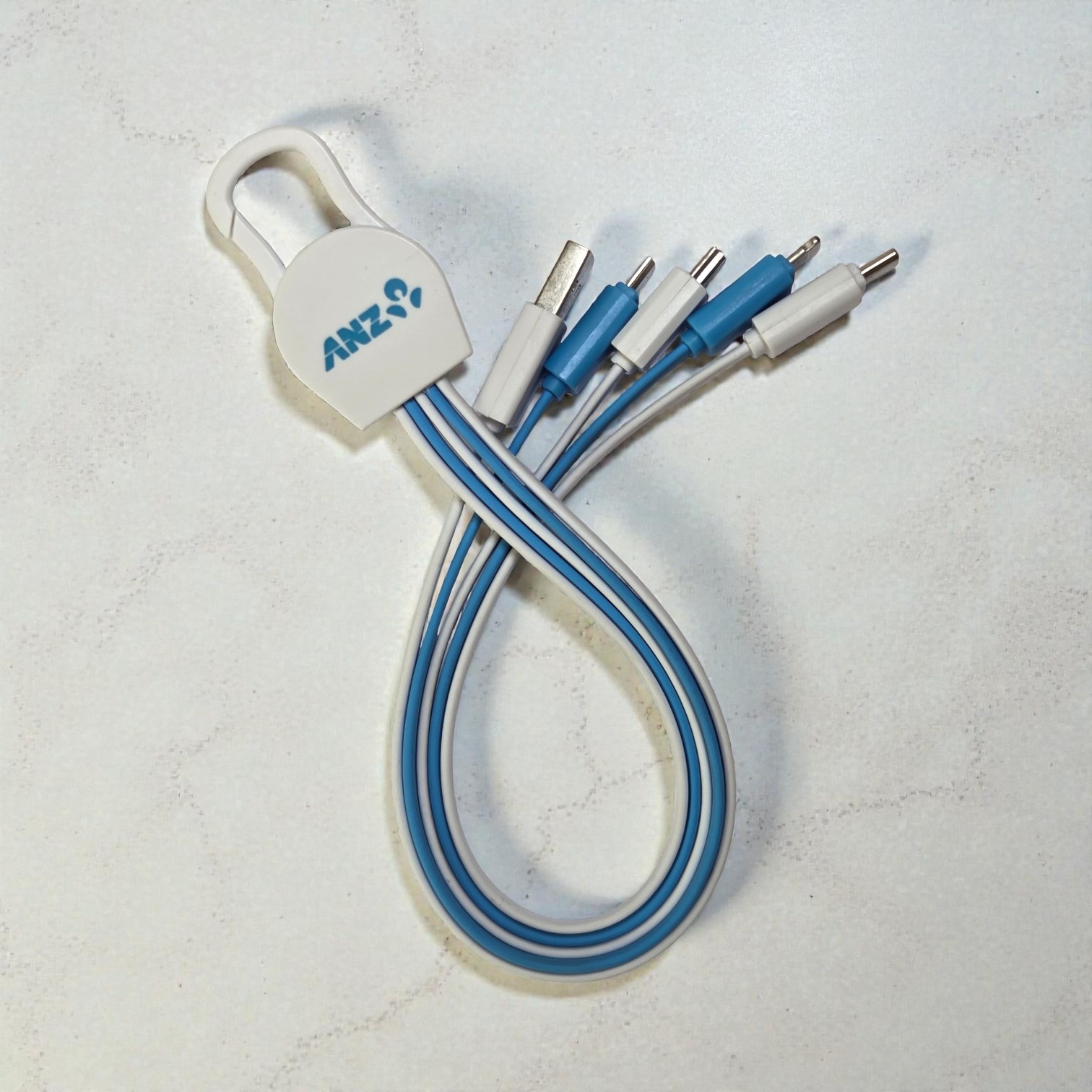
What is fading are novelty tech items that feel impressive at first glance but quickly become obsolete, incompatible, or redundant. In 2026, conference attendees are far more likely to keep one well-designed cable than three flashy gadgets they already own. This aligns closely with findings from our Australian survey, where respondents consistently rated usefulness and compatibility as more important than perceived “cool factor” when receiving promotional items.
Desk-Based Merch Is Quietly Dominating
One of the most consistent trends we see across industry expos and trade shows is the dominance of desk-based items, particularly those that integrate into daily work environments without demanding attention. Microfibre cloths, notebooks, quality pens, and compact desk accessories perform exceptionally well because they live in sightlines — on desks, near screens, or in bags — where brand impressions accumulate naturally over time.
From our survey data, respondents were significantly more likely to recall a brand name when the promotional item was something they used multiple times per week rather than something tied to a single moment or event.
Sustainability Without the Theatre
Sustainability is no longer a headline feature — it’s an expectation. However, 2026 marks a clear shift away from vague sustainability messaging toward products with tangible, explainable benefits. Conference organisers are increasingly choosing:
- Australian-made products with shorter supply chains
- Reusable items with clear longevity
- materials that feel durable rather than disposable
From both internal order data and broader industry research, products that clearly explain why they are sustainable outperform those that simply carry generic eco-labels.
Budget Still Matters — But Allocation Has Changed
Budgets have not disappeared; they have become more strategic. Rather than spending evenly across large quantities of low-impact items, many organisers are reallocating spend toward fewer categories with higher retention.
| Tier | Budget Range (per attendee) | Typical Product Mix |
|---|---|---|
| Entry | $5–$10 | Pens, microfibre cloths, lanyards |
| Mid | $10–$20 | Notebooks, bottles, cable kits |
| Premium | $20–$40 | Apparel, curated kits, Aussie-made item |
Cubic Promote’s internal data shows that mid-tier items often deliver the best balance between cost control and long-term brand visibility, particularly for industry expos where attendees are selective about what they take home.
What does this mean for Industry Expos and Trade Shows?
Trade shows differ from conferences in one key way: attention is fragmented. Attendees move quickly between booths, conversations, and demonstrations, so merchandise needs to communicate value instantly while still offering long-term relevance. Sponsors who understand this shift will see higher engagement and better post-event recall, even with fewer items distributed. In 2026, the most successful expo merchandise will:
- it will be easy to carry
- require no explanation
- integrate naturally into daily work life
- Avoid excessive branding that limits reuse
How I Help Clients Plan Conference Merch
I usually start with a few simple questions. What’s the theme of the conference? Who’s actually attending? What do you want people to walk away with? Context is important when planning the merch. Something can be a good product, but completely wrong for the audience or setting. Once that’s clear, execution becomes much easier. That’s where I usually step in to help clients move quickly:
- Suggesting products that match the event and audience
- Recommending branding methods that work for the material
- Managing timelines, including rush orders when deadlines are tight
A Practical Checklist for Conference Organisers (2026)
Before locking in your merchandise, ask:
- Does this item solve a real problem for attendees?
- Will it be used more than once after the event?
- Is it lightweight and travel-friendly?
- Does the branding enhance, rather than overpower, usability?
- Can we clearly explain its sustainability or origin if asked?
- Does it fit comfortably within carry-on luggage or a work bag?
- Are we investing in fewer, better items rather than more forgettable ones?
If an item struggles to answer these questions, it’s unlikely to perform well in 2026.
The Bottom Line for 2026
Conference merchandise is not becoming less important — it is becoming more selective. The brands and organisers who succeed next year will not be the ones with the biggest piles of giveaways, but the ones whose merchandise quietly integrates into attendees’ lives, desks, and routines.
In a year where attention is expensive, and memory is fragile, the most effective conference merch will be the kind people forget they were given — because they simply keep using it.
If you’re planning industry expos or trade shows for 2026 and want guidance grounded in real data rather than trends for trend’s sake, Cubic Promote can help you design a merchandise strategy that balances relevance, budget, and long-term brand impact.